
South Wales: capital, coalfield, coast path and the Beacons
From Cardiff's castle to the cliffs of St Davids, South Wales packs a capital, three protected landscapes and Britain's only coastal national park into a two-hour drive.
What South Wales is really like
Stand on the beach at Rhossili at low tide and you can see most of the argument for South Wales in one sweep: three miles of sand, a rusting shipwreck rib-cage poking out of it, a tidal causeway to a rock shaped like a sea serpent, and, an hour's bus ride behind you, a university city with a covered market selling cockles and laverbread. Drive two hours the other way and you are in a capital with a castle in the middle of its shopping streets. In between lie the old coalfield valleys, a mountain range that rises to 886 m, and some of the best castle-hopping in Europe.
The region is the most populated part of Wales, and that is its great practical advantage. Trains run often, hotels are plentiful, and you can get to the wild bits on public transport more easily than anywhere else in the country. It suits city-break visitors who want a day in the hills, walkers who want a proper pub at the end of the path, families who need beaches and rainy-day museums within the same hour, and anyone who likes their history in layers: Roman forts, Norman keeps, Victorian ironworks, miners' institutes.
It suits people who want guaranteed sunshine less well. Cardiff averages around 1,150 mm of rain a year, and the Beacons get a good deal more. Pack a waterproof and treat a dry day on the coast as the gift it is.

The seven areas, east to west and back
We split the region into seven areas. Each has its own guide with towns, transport and where to stay.
Cardiff and the Vale of Glamorgan
The capital is compact, walkable and good value by British city standards. Cardiff Castle sits on Roman foundations at the end of Queen Street, Cardiff Bay is the old coal port turned arts quarter, and the free open-air museum at St Fagans is one of the best days out in Wales. The Vale, just west, is gentler: Penarth's pier, Barry Island's beach and the limestone cliffs of the Glamorgan Heritage Coast. Read the full guide to Cardiff and the Vale of Glamorgan.
Swansea, Mumbles and Gower
Gower became Britain's first Area of Outstanding Natural Beauty in 1956 (now called a National Landscape), and it still feels like a reward for getting out of Swansea. Three Cliffs, Oxwich and Rhossili Bay and Worm's Head are the headline beaches; Mumbles is the place for an ice cream and a pier at sunset. See our Swansea, Mumbles and Gower guide.
Carmarthenshire
The quiet county between Gower and Pembrokeshire, and the one most visitors drive straight through. They miss the National Botanic Garden of Wales, Dylan Thomas's writing shed at Laugharne, the clifftop ruin of Carreg Cennen and the seven miles of Pendine Sands. Our Carmarthenshire guide makes the case.
Pembrokeshire
The far west, and for many people the best thing in Wales. The Pembrokeshire Coast National Park, created in 1952, is the only national park in the UK made up largely of coast, and the Pembrokeshire Coast Path follows it for 186 miles. Add Tenby, the tiny cathedral city of St Davids, the puffins of Skomer and the dune-backed cove at Barafundle. Start with the Pembrokeshire area guide.
Bannau Brycheiniog (Brecon Beacons)
The national park took its Welsh name in April 2023 and covers 1,344 square kilometres of sandstone ridges, limestone gorges and sheep. Pen y Fan is the highest point in southern Britain; south of it, the gorges of Waterfall Country let you walk behind a curtain of water at Sgwd yr Eira. Underground, Dan-yr-Ogof is the big show cave. More in our Bannau Brycheiniog guide.
The South Wales Valleys
The former coalfield north of Cardiff is where modern Wales was forged, quite literally. Ride the cage 90 m down at Big Pit National Coal Museum in the Blaenavon World Heritage Site, then see Caerphilly Castle, the biggest castle in Wales, when it reopens after its winter works. Read the South Wales Valleys guide.
Wye Valley and Monmouthshire
The border country: wooded gorges, market towns and three of Wales's finest ruins within half an hour of each other at Chepstow, Tintern and Raglan. Abergavenny, on the edge of the Black Mountains, is the region's food town. See the Wye Valley and Monmouthshire guide.
Ten sights that earn their place
If you only have time for a handful, these are the ones we would build a trip around, roughly east to west.
- Tintern Abbey: a roofless Cistercian church founded in 1131, best in early morning mist off the Wye.
- Chepstow Castle: begun in 1067 and the oldest surviving post-Roman stone fortification in Britain, with gatehouse doors tree-ring dated to 1159-89.
- Big Pit: free museum entry and a guided trip underground with a former miner (the tour itself is £5 on the day or £8 for a pre-booked timed slot).
- Castell Coch: a Victorian fairy-tale castle in beech woods above Tongwynlais, all painted vaulted ceilings and conical turrets.
- Cardiff Castle: Roman wall, Norman keep and William Burges's gilded Gothic fantasy rooms, all inside one enclosure.
- St Fagans: more than 40 original buildings from across Wales rebuilt in 100 acres of parkland, free to enter (parking is £7).
- Pen y Fan: 886 m, with Corn Du (873 m) next door; the classic route from Pont ar Daf is busy but short.
- Sgwd yr Eira and the other falls around Pontneddfechan and Ystradfellte.
- Rhossili Bay: walk out to Worm's Head only in the window of about two and a half hours either side of low tide.
- St Davids and its cathedral: a medieval cathedral in a hollow, a city of under 2,000 people, and the wildest stretch of the coast path on the doorstep.
For guided options, including Pen y Fan hikes and day trips from Cardiff, browse tours and activities in Wales.
Tours in South Wales
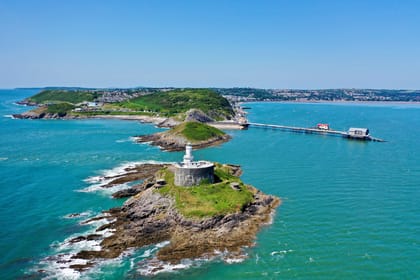 8 hoursCardiff/Swansea: Gower Peninsula's Cliffs & Mumbles Day Tour4.9(284)from£83
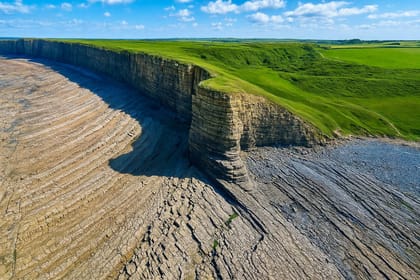 8 hoursCardiff: South Wales Cliffs, Beaches & Castles Day Tour4.9(284)from£62.25
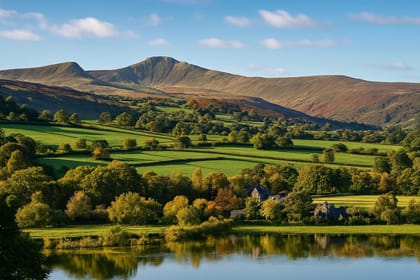 8 hoursCardiff: National Park, Waterfalls & Heritage Day Tour4.9(280)from£83
Prices and availability from GetYourGuide. We may earn a commission if you book.
Itineraries for two to four days
Three days without a car: Cardiff, the Beacons and Gower
Day 1, Cardiff. Morning at Cardiff Castle, then walk or take the short train from Queen Street to Cardiff Bay for the Wales Millennium Centre and the Senedd. If you have energy left, the Barrage walk runs round to Penarth.
Day 2, Pen y Fan. Take the Valley Lines train from Cardiff to Merthyr Tydfil (about an hour), then the TrawsCymru T4 towards Brecon, which runs hourly between Merthyr and Brecon from Monday to Saturday and stops at the Storey Arms. From there it is a steady climb to Corn Du and Pen y Fan. Catch the T4 back south, or carry on to Brecon for the night. In bad weather, swap the summit for Big Pit: train to Newport, then the Stagecoach X24 to Blaenavon.
Day 3, Gower. Train to Swansea (roughly an hour from Cardiff), then the 118 bus from the city bus station to Rhossili, which takes around an hour via Parkmill and Reynoldston. Walk the clifftop to Worm's Head if the tide allows, and come back for dinner in Mumbles.
Four days with a car: border to far west
Day 1: Chepstow Castle, Tintern Abbey and Raglan, then on to Brecon. Day 2: Pen y Fan at first light before the car park fills, Waterfall Country in the afternoon. Day 3: west along the A40 and A48 to the Botanic Garden at Llanarthne, Laugharne for a late lunch, and Tenby by evening. Day 4: Stackpole Quay and the walk to Barafundle, then up to St Davids for sunset at Whitesands or St Non's.
Two days, Pembrokeshire by train and bus
Take the train to Tenby on the Pembroke Dock branch and spend the first day on its beaches and walls. On day two, take the train to Haverfordwest (changing at Whitland) and pick up the T11 to St Davids, walk a section of coast path, and return the same way. Between late May and late September the coastal shuttle buses open up more of the coast, including the 400 Puffin Shuttle from St Davids to Marloes, the village nearest the Skomer boats.
Getting there and getting around
By train. GWR runs from London Paddington through Newport to Cardiff, with the fastest trains taking around 1 hour 45 minutes, and on to Swansea. TfW trains link Cardiff with Manchester via Shrewsbury and Abergavenny, and continue west from Swansea to Carmarthen, Tenby, Pembroke Dock, Milford Haven and Fishguard. The Heart of Wales line strikes north from Llanelli through Llandeilo and Llandovery. More on lines and timetables in our guide to trains in Wales.
By air and sea. Cardiff Airport at Rhoose is small and mostly holiday flights; WestJet's seasonal Toronto service is due back in May 2027. Bristol Airport, across the Severn, has a much wider choice. Ferries sail from Rosslare to Fishguard (Stena Line) and Pembroke Dock (Irish Ferries). See getting to Wales.
Without a car. The Cardiff Valley Lines are now fully electrified and form the backbone of the South Wales Metro, although the new Class 398 tram-trains were taken out of service in September 2026 for software updates, with no return date announced by November 2026. Beyond the railway, TrawsCymru coaches fill the gaps: the T4 (Merthyr, Storey Arms, Brecon, Newtown), the T6 (Swansea, Dan-yr-Ogof, Brecon), the T11 (Haverfordwest, St Davids, Fishguard) and the T5 up the coast to Cardigan and Aberystwyth. The Explore Wales Pass costs £169 for an adult (price valid until 28 February 2027) and covers rail on four days in eight plus most buses on all eight. Young people aged 5-21 pay £1 for a single bus journey until March 2027. Our bus guide and tickets and passes page have the detail.
With a car. The M4 runs the length of the populated south as far as Pont Abraham, then the A48 and A40 carry on to Carmarthen and Pembrokeshire. Cardiff to St Davids is about two and a half hours without stops. Mountain and beach car parks fill early on summer weekends, particularly at Pont ar Daf for Pen y Fan.
Where to base yourself
With a week, split it: three nights in the east and three or four in the west. Moving every night wastes the best hours.
- Cardiff: the biggest choice of hotels in Cardiff and the best rail hub for day trips to the Valleys, Caerphilly, the Wye and the Beacons. From 1 April 2027 the council charges a visitor levy of £1.30 per person per night (75p in hostel dorms and on campsites), so budget for it on stays booked now.
- Swansea and Mumbles: places to stay in Swansea put you a bus ride from Gower and on the main line west.
- Brecon: the natural walking base, with hotels and inns in Brecon on the T4 and T6 routes. Hay-on-Wye, just over the park's north-eastern edge, is the bookish alternative: see where to stay in Hay-on-Wye.
- Tenby: the classic seaside base for south Pembrokeshire, with a station; see hotels in Tenby.
- St Davids: smaller, quieter, closer to the islands; see where to stay in St Davids.
Travelling with a dog or after somewhere with character, try our pet-friendly stays and boutique hotels.
Food and drink
South Wales eats better than its reputation. Swansea Market is the place to try laverbread (seaweed cooked down to a dark purée, traditionally fried with oats and served with cockles and bacon) and to buy Welsh cakes warm off the griddle. Cockles still come from the Burry Inlet around Penclawdd on north Gower. Cardiff's Victorian covered market and its arcades are good for a cheap lunch, and the city's rugby-day pubs are an experience in themselves.
Look out for Glamorgan sausages (cheese, leek and breadcrumbs, no meat), cawl (a slow lamb and vegetable broth), Caerphilly cheese and salt-marsh lamb from the Gower and Carmarthenshire estuaries. Penderyn's whisky distillery sits at the top of Waterfall Country and runs tours. In Pembrokeshire, crab and lobster landed on the coast turn up in pub menus from Solva to Tenby, and Narberth is the county's independent-food town. The region's big food event is the Abergavenny Food Festival, usually held on the third weekend of September (19-20 September in 2026).

When to go
Late April to June is the best all-round window. May is one of the driest and sunniest months, the bluebells are out, and puffins are ashore on Skomer from roughly April to July.
July and August bring the warmest weather and school-holiday crowds. Book Tenby and St Davids accommodation and Skomer boats well ahead. The Pembrokeshire coastal buses run their full summer timetable, which for 2027 is due from 29 May to 26 September.
September is the local favourite: warm sea, quieter paths, still-long evenings.
October to March is wet and dark, with Cardiff's heaviest rain between October and December, but it is good for castles, free national museums and storm-watching. Know the closures before you go. Caldey Island is shut until Easter 2027, Caerphilly Castle is closed from 30 November 2026 while Cadw replaces a bridge (it plans to reopen by Easter 2027), Tintern runs winter hours of 10am-4pm from 1 November to 28 February, and in Pembrokeshire only the Coastal Cruiser bus runs, on Thursdays and Saturdays, until 28 May 2027. Check our Wales weather guide and the forecast for Cardiff or Pen y Fan before you set out.

South Wales: practical questions
Can you tour South Wales without a car?
How many days do you need for South Wales?
Is there a tourist tax in Cardiff?
Are the Brecon Beacons and Bannau Brycheiniog the same place?
When can you see puffins in South Wales?
What is the best base for exploring South Wales?
Top attractions in South Wales
See all →
Cardiff Castle
A Roman fort, a Norman keep and some of the most lavish Victorian interiors in Britain, all inside one wall in the middle of the capital. Here is how to see the best of it.

Cardiff Bay
Coal built it, a barrage reinvented it. The best way to see the old Tiger Bay docks is on foot, from the Millennium Centre out across the barrage to Penarth.

St Fagans National Museum of History
More than forty buildings from all over Wales, taken down and rebuilt in the grounds of an Elizabethan manor. Free, vast and the best place to meet the Welsh past.

Castell Coch
A Victorian fantasy on medieval foundations, rising out of beech woods five miles from Cardiff. The scaffolding is finally down, and the original red is back.

Caerphilly Castle
Thirty acres of walls, dams and lakes in a Valleys town, with a tower that out-leans Pisa. Closed this winter for a new bridge; Cadw plans to reopen by Easter 2027.

Tintern Abbey (Abaty Tyndyrn)
Wales's first Cistercian abbey stands roofless on a bend of the Wye. Here is what to see, what the current repairs mean for your visit, and how to get there by bus.

Pen y Fan (Bannau Brycheiniog)
The 886 m summit of Bannau Brycheiniog is a short climb from the A470, which is exactly why people underestimate it. Here is how to pick a route and come back safely.

Waterfall Country (Sgwd yr Eira)
Four rivers, a dozen falls and one curtain of water you can walk behind. How to plan a day in Bannau Brycheiniog's Waterfall Country, from Ystradfellte to Pontneddfechan.

Big Pit National Coal Museum
Free to enter, with a guided descent 90 m into a real colliery. What the underground tour involves, what it now costs, and how to fit Blaenavon's World Heritage landscape around it.
Rhossili Bay & Worm's Head, Gower
Three miles of sand, a wreck, a whaleback hill and a rocky island you can only reach at low tide. How to plan a day at Gower's western tip, and how not to get cut off.

Tenby
A walled medieval town on a headland, with a sheltered beach for every wind, a monks' island offshore and a railway station ten minutes from the sand.

St Davids & St Davids Cathedral
Britain's smallest city hides a 12th-century cathedral in a hollow, a bishop's palace fit for a prince and, ten minutes' walk away, some of the wildest coast in Wales.

Pembrokeshire Coast Path
Wales's first National Trail runs 186 miles from St Dogmaels to Amroth. Here is how to walk it, in a fortnight or one glorious day at a time.

Skomer Island
Over 40,000 puffins nest on this island off the Marloes peninsula, many of them beside the path. Here is how to get a landing, and what to do when you are there.

Barafundle Bay
A dune-backed cove between limestone headlands, half a mile from the nearest car park and with nothing on it but sand. Go early, bring a picnic, and carry it all out again.

Laugharne & Dylan Thomas Boathouse
Dylan Thomas spent his last four years in a cliffside house above the Taf estuary. The Boathouse is due a winter refit, so check it is open, but his Laugharne is there to walk all year.

National Botanic Garden of Wales
Norman Foster's giant glass dome holds the flora of six Mediterranean climates, set in 568 acres of Carmarthenshire meadow and parkland. Best of all on a wet winter's day.

Dan-yr-Ogof National Showcaves
Discovered by two farming brothers with candles and a coracle, the caves under the Black Mountain are the real draw at this family-friendly showcave centre in the upper Swansea valley.

Chepstow Castle
Begun within a year of the Norman Conquest and added to for six centuries, Chepstow Castle strings the whole history of castle building along one limestone cliff above the River Wye.

Raglan Castle (Castell Rhaglan)
Built by ambitious Welsh lords in the fifteenth century and wrecked after one of the last sieges of the Civil War, Raglan is a palace in fortress clothing, and a ruin with real presence.