
Big Pit National Coal Museum: 90 metres down a real Welsh colliery
Free to enter, with a guided descent 90 m into a real colliery. What the underground tour involves, what it now costs, and how to fit Blaenavon's World Heritage landscape around it.
The cage drops 90 m, the floor shudders, and then you are standing at the bottom of a Victorian coal mine with a helmet on your head and a lamp battery dragging at your belt. The air smells of damp stone and old oil. If your guide asks the group to switch off their lamps, as many do, you will learn what dark means. There is no getting used to it.
Big Pit, in Blaenavon (Blaenafon), is a real colliery that closed in 1980 and reopened three years later as a museum. Its guides, many of them former miners, take visitors down the shaft and through the old workings for an hour of stories about ponies, explosions, wages and the jokes that got men through a shift. It is one of the best museums in Britain, and the entry is free.
The underground tour
The tour is the heart of a visit. After a safety briefing you are kitted out with a hard hat, cap lamp and belt battery, and you go down in the pit cage with your guide. At the bottom you walk through the roadways, past old coal faces, ventilation doors and the stables where pit ponies lived underground. The tour takes about an hour. You will bend low in one or two places, the floor is uneven and often wet, and it is cool down there all year, so bring a warm layer and sensible shoes.
You must be at least 1 m tall to go underground, and under-16s must be with an adult at all times. Wheelchair users should book in advance.
What to leave on the surface
Coal mines and electronics do not mix: a spark can ignite methane. Before you go down, staff lock away anything battery-powered or flammable. That means mobile phones, cameras of any kind, battery watches, car key fobs, calculators, radios and music players, as well as cigarettes, matches and lighters. Yes, that includes your phone. There are no photos from underground, and that is part of the point.

Above ground
Budget at least another hour for the surface buildings, which are free and worth it on their own. The headframe and pithead buildings are listed structures, and the winding house shows the engine that hauled the cages. The pithead baths, installed in 1939, now hold exhibitions about mining life and the museum's coffee shop. Before the baths, men walked home black from the shift and washed in a tin bath by the fire.
From 1 October 2026 to 1 November 2027 the museum is hosting Stories from Aberfan, an exhibition on the 1966 disaster in which a colliery spoil tip slid onto the village of Aberfan, killing 144 people, 116 of them children. It is handled with care and is a sobering reminder of what coal cost the Valleys.
Seasonal events run through the year, including Santa Underground on 28-29 November and 5-6 December 2026; see the museum's What's On page.
Tours and tickets: Big Pit National Coal Museum
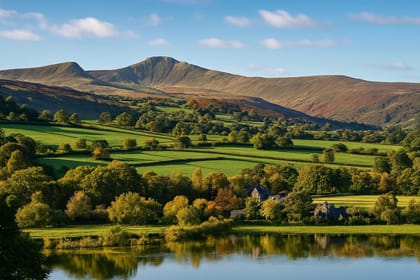 8 hoursCardiff: National Park, Waterfalls & Heritage Day Tour4.9(280)from£83
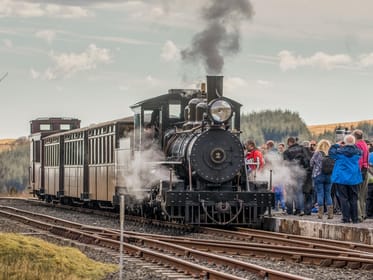 8 hoursCardiff: Welsh Castles, Mountains & Steam Railway Day Tour4.7(143)from£119
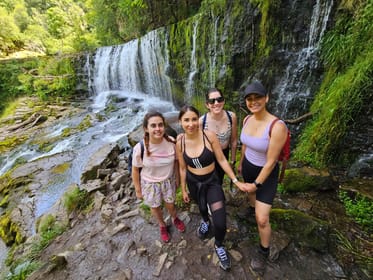 9 hoursGuided Brecon Beacons 4-Waterfall Day Hike from Cardiff5.0(11)from£129
Prices and availability from GetYourGuide. We may earn a commission if you book.
The story of the pit
Coal had been dug around Blaenavon since the early 19th century to feed the local ironworks, and the mine was first recorded as "Big Pit" in an inspector's report of 1881. The shaft was deepened in 1878 to reach the Old Coal seam at 89 m, roughly where the tour goes today. At its peak, around 1923, about 1,400 men worked here.
The pit closed on 2 February 1980. It reopened to visitors in 1983 as a charitable trust and became part of Amgueddfa Cymru, Museum Wales, in 2001. In 2005 it won the Gulbenkian Prize, now known as Museum of the Year.
Blaenavon World Heritage Site
Big Pit sits in a bigger story. In 2000 UNESCO inscribed the Blaenavon Industrial Landscape as a World Heritage Site, covering the coal mines, quarries, tramroads, workers' housing and the ironworks that made this upland valley one of the engines of the Industrial Revolution. Walk the hillsides above the museum and the scars are everywhere: old tips, levels and the lines of horse-drawn tramways now softened by heather.
Down the hill in the town, Cadw's Blaenavon Ironworks preserves blast furnaces and a row of ironworkers' cottages, and the town centre has a World Heritage centre that explains the landscape. Together they make a full day.
Opening times and tickets
| Item | Details |
|---|---|
| Opening hours | Daily 9.30am to 4pm, last entry 3pm |
| Underground tours | 10am to 3pm |
| Museum entry | Free |
| Underground tour | £5 on arrival (no guaranteed slot); £8 pre-booked Job-A-Knock |
| Parking | £5 per day; free for Blue Badge holders and motorbikes |
| Coffee shop | Daily 10am to 4pm; picnics welcome |
Check the museum website for Christmas and New Year closures before travelling in late December. The site is on a steep hillside with long ramps, steps and uneven floors, and an access guide is available online. Assistance dogs are welcome everywhere except underground; other dogs are allowed only outdoors, on a short lead.
Planning your visit
Arrive early, especially in school holidays. Underground tours start at 10am and the last one leaves at 3pm, and on busy days the queue for on-the-day slots builds through the morning. A sensible plan is to put your name down for a tour as soon as you arrive, then explore the surface buildings while you wait.
Dress for the underground, not the weather outside. Even on a hot July day it is cool and damp at the bottom of the shaft, so bring a fleece or jumper and wear flat shoes with some grip; heels and sandals are a poor idea on wet, uneven roadways. The helmet and lamp are provided.
The tour suits most children who meet the 1 m height rule, and most of them love it. Some younger children find the cage ride and the darkness unsettling, so talk it through beforehand. Anyone with claustrophobia should know that the roadways are mostly roomy but low in one or two places.
Allow around three hours in total: an hour underground, an hour or more on the surface, and time for a coffee. On a wet day it is one of the best options in South Wales, which also means it gets busier when it rains.
Getting there
By car: follow the brown signs from junction 25a (westbound) or 26 (eastbound) of the M4, or from the A465 Heads of the Valleys road at Brynmawr or Abergavenny. For sat nav, the museum suggests the postcode NP4 9RL. Cardiff is about an hour's drive away.
By public transport: Stagecoach route X24 runs from Newport via Cwmbran and Pontypool to Blaenavon roughly every half-hour through the day; check journey times on Traveline Cymru. Cwmbran and Newport both have railway stations. The museum stands on the hillside about a mile west of Blaenavon town centre, and the walk up is steep, so ask the journey planner whether a local connection or a taxi gets you closer. Our guides to buses in Wales and trains in Wales have ticket advice.

Combine it with
Big Pit makes an easy pairing with Caerphilly Castle, under an hour's drive down the Valleys (though the castle is closed from 30 November 2026 while Cadw installs a new bridge, with reopening planned by Easter 2027), or with St Fagans National Museum of History in Cardiff, its sister museum, where a workmen's institute and a terrace of workers' houses from the industrial Valleys have been rebuilt. Heading east, Raglan Castle is under half an hour away via Abergavenny. For more in the area, see our guide to the South Wales Valleys.
Blaenavon has little accommodation, so most visitors stay in Cardiff, with the widest choice in the region; see our pick of hotels in Cardiff.
Big Pit National Coal Museum on video
Big Pit National Coal Museum: questions people ask
Is Big Pit free?
How deep is the Big Pit underground tour?
Can I take my phone underground at Big Pit?
Can children go underground at Big Pit?
Is Big Pit open in winter?
Big Pit National Coal Museum on the map
Nearby attractions

Raglan Castle (Castell Rhaglan)
Built by ambitious Welsh lords in the fifteenth century and wrecked after one of the last sieges of the Civil War, Raglan is a palace in fortress clothing, and a ruin with real presence.

Caerphilly Castle
Thirty acres of walls, dams and lakes in a Valleys town, with a tower that out-leans Pisa. Closed this winter for a new bridge; Cadw plans to reopen by Easter 2027.

Pen y Fan (Bannau Brycheiniog)
The 886 m summit of Bannau Brycheiniog is a short climb from the A470, which is exactly why people underestimate it. Here is how to pick a route and come back safely.

Castell Coch
A Victorian fantasy on medieval foundations, rising out of beech woods five miles from Cardiff. The scaffolding is finally down, and the original red is back.

Tintern Abbey (Abaty Tyndyrn)
Wales's first Cistercian abbey stands roofless on a bend of the Wye. Here is what to see, what the current repairs mean for your visit, and how to get there by bus.

Waterfall Country (Sgwd yr Eira)
Four rivers, a dozen falls and one curtain of water you can walk behind. How to plan a day in Bannau Brycheiniog's Waterfall Country, from Ystradfellte to Pontneddfechan.
If you like Big Pit National Coal Museum
Caerphilly Castle
Thirty acres of walls, dams and lakes in a Valleys town, with a tower that out-leans Pisa. Closed this winter for a new bridge; Cadw plans to reopen by Easter 2027.

St Fagans National Museum of History
More than forty buildings from all over Wales, taken down and rebuilt in the grounds of an Elizabethan manor. Free, vast and the best place to meet the Welsh past.
Raglan Castle (Castell Rhaglan)
Built by ambitious Welsh lords in the fifteenth century and wrecked after one of the last sieges of the Civil War, Raglan is a palace in fortress clothing, and a ruin with real presence.