
Caerphilly Castle: lakes, a leaning tower and the biggest castle in Wales
Thirty acres of walls, dams and lakes in a Valleys town, with a tower that out-leans Pisa. Closed this winter for a new bridge; Cadw plans to reopen by Easter 2027.
Caerphilly is the castle that people who have "done" Conwy and Caernarfon tend to skip, and they are wrong to. It is the largest castle in Wales and usually ranked second in Britain only to Windsor, spread across about 30 acres, much of it water. It was the first castle in Britain built on the concentric plan, rings of walls within walls, and its artificial lakes were described by the historian Allen Brown as "the most elaborate water defences in all Britain". It sits not on a remote crag but in the middle of a Valleys town, ten minutes' walk from the railway station, with shops, pubs and cafés across the road.
That contrast is part of the pleasure. So is the fact that, since a major refurbishment reopened the Great Hall in July 2025, the castle is in better shape for visitors than it has been in decades, and the bridge work this winter is meant to keep it that way.
A castle built against a prince
In the 1260s, Llywelyn ap Gruffudd, Prince of Wales, was pushing south towards the lowlands of Glamorgan. Gilbert de Clare, the Anglo-Norman lord of Glamorgan, began building at Caerphilly in 1268 to stop him. Llywelyn's forces burned the half-built site in 1270, royal officials briefly took it over in 1271, and de Clare pressed on. What he built was a fortress designed to make an attack almost hopeless: a central island ward with two rings of walls, surrounded by lakes held back by massive stone dams, with fortified gatehouses at every crossing.
By 1283 Edward I had conquered Gwynedd and the threat had gone, and Caerphilly became an administrative centre and grand residence instead. In 1325-26 Hugh le Despenser, the hated favourite of Edward II, remodelled the Great Hall in the latest style, with carved windows and doorways. After Edward's fall the castle was besieged, and the garrison held out until March 1327. By the 16th century it was crumbling. The Marquesses of Bute bought it in 1776, and the 3rd and 4th Marquesses spent decades and fortunes restoring it, rebuilding walls and towers to their medieval line. In 1950 the castle passed to the state, and the lakes, long drained, were flooded again.

How to read the defences
The best way to understand Caerphilly is to walk it from the outside in, the way an attacker would have had to. Before you go through the gate, walk along the road by the eastern lake for the classic view of the whole fortress rising from the water. Then:
- The eastern dam and outer gatehouse. You enter across the long eastern screen wall, which doubled as a dam holding back the lakes. It is a fortress in its own right, with towers and a gatehouse.
- The outer ward. Cross to the central island and you are in a narrow ring between the low outer wall and the much higher inner wall. Anyone who got this far would be trapped in a killing ground, overlooked from above.
- The inner east gatehouse. The massive gatehouse into the inner ward was the castle's strongpoint and lordly lodging. It was repaired as part of the recent works.
- The inner ward and Great Hall. The heart of the castle, with the hall along the south side and the leaning tower in the corner.
- The western island. A further fortified island, the hornwork, guarded the western approach. From here the views back across the water to the inner ward are among the best on the site.
Tours and tickets: Caerphilly Castle
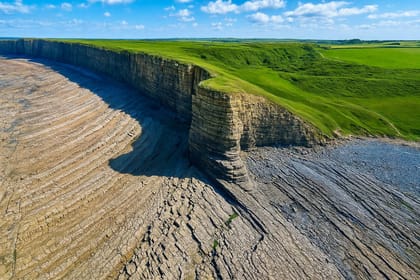 8 hoursCardiff: South Wales Cliffs, Beaches & Castles Day Tour4.9(284)from£62.25
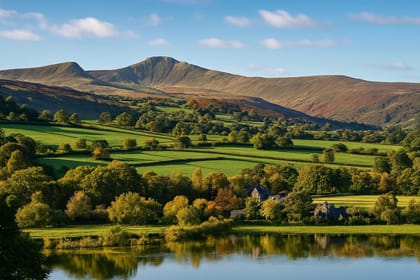 8 hoursCardiff: National Park, Waterfalls & Heritage Day Tour4.9(280)from£83
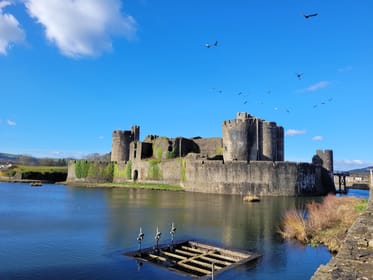 8 hoursFrom Cardiff: Guided Tour of Welsh Valleys4.8(165)from£85
Prices and availability from GetYourGuide. We may earn a commission if you book.
What to see
The leaning tower
The south-east tower of the inner ward leans outwards at about 10 degrees, well beyond the famous tilt of Pisa. Part of it has fallen away, leaving a cross-section of rooms and stairs hanging at an alarming angle. Subsidence is the likely cause, though some accounts blame gunpowder during the Civil War. It has stood like this for centuries, and Cadw describes it, fairly, as wonkier than Pisa.
The Great Hall
Despenser's hall reopened on 19 July 2025 after a Cadw programme of more than £8 million at the castle. It has been decorated to suggest how it might have looked in its medieval heyday, with digital enhancements, and has gained under-floor heating and a kitchen so it can host events and weddings. New interactive displays around the castle tell the stories of the people who lived and worked here.
The water gate
Part of the same project opened up the medieval water-gate passage that links the hall with the southern lake. It is a dark, atmospheric few minutes, and is now open to visitors.
The siege engines
Four replica siege engines stand on the site, giving a sense of what the walls were built to resist. Children make straight for them.
The dragons
Since St David's Day 2016, Caerphilly has had resident dragons. Dewi, the father, was joined by Dwynwen and two babies, Dylan and Cariad, and the family can be found in their lair beside the leaning tower. They are unashamedly for younger visitors, and they work.

Works in progress
The first phase of Cadw's redevelopment is finished: as well as the Great Hall and water gate, it brought new paths and ramps, a wildflower garden, new toilets and repairs to the inner east gatehouse. Visitor numbers in the year after reopening were 20 per cent above pre-pandemic levels, and Caerphilly is now among Cadw's five most visited sites.
Work continues, and the biggest job so far starts this winter. The wooden bridge on the eastern side, which carries every visitor from the visitor centre into the castle, needed emergency repairs in summer 2026 and is now being replaced outright, which is why the castle is closed from 30 November 2026 until Easter 2027. Cadw also plans to replace two more of the castle's bridges in late 2027 and early 2028, but says those works should not need another full closure because other access routes will be available. In summer 2026, specialist contractors on ropes were repointing the South Dam platform wall in lime mortar, and Cadw's own conservation team moved on to the North Dam platform wall. These walls hold in the lakes, so the work is slow and essential. Planning has started on a second phase to improve the visitor welcome, with new areas to relax, play and explore, but Cadw has not published dates. Even after reopening, expect the odd section of scaffolding or closed path, and check the Cadw site for current notices.

Tickets and opening times
The castle is closed from 30 November 2026 until its planned reopening by Easter 2027, so the winter hours below will not apply this season. Cadw's standard seasonal opening hours, as published in November 2026, are a guide to what to expect once it reopens:
| Dates | Hours |
|---|---|
| 1 March to 30 June | 09:30-17:00 |
| 1 July to 31 August | 09:30-18:00 |
| 1 September to 31 October | 09:30-17:00 |
| 1 November to 28 February | 10:00-16:00 |
Last entry is 30 minutes before closing. The castle is closed on 24, 25 and 26 December and 1 January.
In November 2026, Cadw listed 2026 adult admission at £12.90 and a family ticket (two adults and up to three children) at £41.30, with a reduced junior and student price. Under-5s and Cadw members go free, booking online saves 5%, and Cadw's £1 ticket scheme for people receiving Universal Credit and some other benefits applies here: almost 1,400 people used it at Caerphilly in the year after the Great Hall reopened. Cadw usually reviews its prices for the new season, so check the 2027 figures when booking for after the reopening. Cadw has at times warned that a system problem meant it could only accept online tickets at the castle, so booking ahead is the safe option.
Allow two hours, or longer with children. The site is mostly level once you are on the islands, and the new paths and ramps have improved access, but towers and wall walks involve steps.
Getting there
Caerphilly is the easiest major castle in Wales to reach by train. Transport for Wales runs frequent services on the Rhymney line from Cardiff Central and Queen Street: in the daytime, Monday to Saturday, there are typically several trains an hour, and fewer in the evenings and on Sundays. The journey from Queen Street takes about 20 minutes, and the castle is about a ten-minute walk from Caerphilly station through the town centre. Our guide to trains in Wales covers tickets and contactless fares.
Stagecoach South Wales buses also link Cardiff and Caerphilly, including routes X and B (Cardiff to Senghenydd) and the 26 (Cardiff to Blackwood and Ebbw Vale). Drivers should use the pay car parks in the town centre; the Cadw website lists the nearest.
Eating, drinking and staying
The town centre, right outside the castle gates, has cafés, pubs and bakeries, and you are in the home of Caerphilly cheese, the crumbly, salty cheese traditionally said to have gone down the pits in miners' lunch tins. Ask for it in local delis and cafés.
Caerphilly has limited accommodation, and most visitors stay in Cardiff, 20 minutes away by train. Compare hotels in Cardiff; note that Cardiff charges a visitor levy of £1.30 per person per night in most accommodation on stays from 1 April 2027.
Combine it with
Gilbert de Clare's other castle, Castell Coch, is a few miles west over the ridge, rebuilt by the Victorians as a fairy-tale retreat: seeing the two on the same day is a lesson in how differently the 13th and 19th centuries imagined a castle. Back in the capital, Cardiff Castle was restored by the same Bute family. To go deeper into the Valleys, Big Pit National Coal Museum in Blaenavon is free to enter, with a small charge for the underground tour (£5 on the day or £8 pre-booked). If you are comparing Wales's great castles, Caerphilly makes a fine counterpart to Edward I's Conwy Castle in the north. For more on the area, see our guide to the South Wales Valleys.
Caerphilly Castle on video
Caerphilly Castle: questions people ask
Is Caerphilly Castle open in winter 2026-27?
Is Caerphilly Castle the biggest castle in Wales?
How much does it cost to visit Caerphilly Castle?
How much does the Caerphilly Castle tower lean?
Is the Great Hall at Caerphilly Castle open?
How do I get to Caerphilly Castle from Cardiff?
Caerphilly Castle on the map
Nearby attractions

Castell Coch
A Victorian fantasy on medieval foundations, rising out of beech woods five miles from Cardiff. The scaffolding is finally down, and the original red is back.

St Fagans National Museum of History
More than forty buildings from all over Wales, taken down and rebuilt in the grounds of an Elizabethan manor. Free, vast and the best place to meet the Welsh past.

Cardiff Castle
A Roman fort, a Norman keep and some of the most lavish Victorian interiors in Britain, all inside one wall in the middle of the capital. Here is how to see the best of it.

Cardiff Bay
Coal built it, a barrage reinvented it. The best way to see the old Tiger Bay docks is on foot, from the Millennium Centre out across the barrage to Penarth.

Big Pit National Coal Museum
Free to enter, with a guided descent 90 m into a real colliery. What the underground tour involves, what it now costs, and how to fit Blaenavon's World Heritage landscape around it.

Waterfall Country (Sgwd yr Eira)
Four rivers, a dozen falls and one curtain of water you can walk behind. How to plan a day in Bannau Brycheiniog's Waterfall Country, from Ystradfellte to Pontneddfechan.
If you like Caerphilly Castle
Castell Coch
A Victorian fantasy on medieval foundations, rising out of beech woods five miles from Cardiff. The scaffolding is finally down, and the original red is back.
Cardiff Castle
A Roman fort, a Norman keep and some of the most lavish Victorian interiors in Britain, all inside one wall in the middle of the capital. Here is how to see the best of it.
Big Pit National Coal Museum
Free to enter, with a guided descent 90 m into a real colliery. What the underground tour involves, what it now costs, and how to fit Blaenavon's World Heritage landscape around it.