
White water rafting in Wales: the Tryweryn, Cardiff and the River Dee
Dam-fed rapids at Bala, a pumped course in Cardiff Bay and the natural Dee at Llangollen: how each one works, when it runs, who can go and what you will pay.
Every raft that bounces down the Tryweryn is riding on one of the sorest subjects in modern Welsh history. The water comes from Llyn Celyn, the reservoir built between 1960 and 1965 to serve Liverpool, which drowned the village of Capel Celyn after 35 of Wales's 36 MPs had opposed the bill. The dam that erased a Welsh-speaking community now gives Wales its best-known white water, and it is worth knowing both halves of that story before you climb into the raft.
Wales has five rafting waters worth the journey: the dam-fed Tryweryn near Bala, the pumped course in Cardiff Bay, the natural Dee at Llangollen, and two rain-dependent rivers, the Teifi and the upper Wye. They feel very different, and the wrong choice for your dates can mean a cancelled trip or a gentle float where you wanted a soaking.
Where to raft in Wales at a glance
Prices are the operators' own published figures from November 2026. Many vary by date and group size.
| River | Operator | Water | Grade | Min age | From |
|---|---|---|---|---|---|
| Tryweryn, Bala | National White Water Centre | Dam release | 3-4 | 12 (safari 10) | £45 |
| Tryweryn, Bala | Bala Adventure and Watersports | Dam release | 3-4 | 12 (safari 10) | £60 |
| Cardiff Bay | Cardiff International White Water | Pumped course | Artificial | 12 (family 6) | £37 family, £65 standard |
| Dee, Llangollen | Whitewater Active | Natural, regulated | 2-3 | 8 | £60 |
| Dee, Llangollen | Bearded Men Adventures | Natural, regulated | Not stated | 8 | £60 |
| Dee, Llangollen | TNR Outdoors | Natural, regulated | Not stated | 7 | £45 |
| Teifi, Llandysul | Adventure Beyond | Rain-fed | 2-4 | Ask | £60 |
| Upper Wye | Black Mountain Activities | Rain-fed, October to March | Not stated | 16 | £70 |
The National White Water Centre, Tryweryn
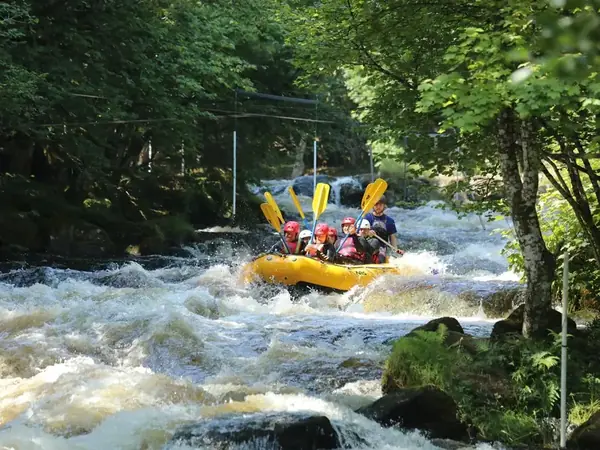
Canolfan Tryweryn sits on the A4212 about a mile past Frongoch, in the hills above Bala. This is the benchmark: a narrow, continuous, tree-lined run of grade 3-4 rapids that comes at you with little time to reset between them. Parking is free, and the Riverside Café has a terrace over the water, so non-rafters can watch with a coffee or walk the Tryweryn Trail alongside the course.
| Session | Time | What you get | Price | Min age |
|---|---|---|---|---|
| Rapid Session | About 1 hour | 2 runs of the upper rapids | £45-£54 pp; private raft £270 | 12 |
| Ultimate Rafting | About 2 hours | 3 runs, grade 3-4 | £63-£84 pp; private raft £370 | 12 |
| Rafting Safari | About 1.5 hours | 4 miles down the lower river to Bala, with a class 4 finale you can avoid | £310 per raft (2-5 people) | 10 |
| Orca Extreme | 4.5 hours | The centre's longest session | £156 pp (minimum 4) | 16 |
Add £8 per person for wetsuit hire on the Rapid, Ultimate and Safari sessions, or bring your own if it has full-length legs and passes a staff check. Buoyancy aids, helmets and wetsuit boots are included. Rapid Sessions and the Safari need at least two people to run and Ultimate at least four, so solo bookers should ring first. Group rates can bring Ultimate down to about £50 per person.
Bala Adventure and Watersports, based on the lake foreshore, also sells Tryweryn rafting: a one-hour taster with two runs from £60, a full session from £95, and a 6 km safari on the lower river from £350 per group. Compare the two for your date, since the river is the same.
How dam releases decide your day
The Tryweryn only runs when water is let out of Llyn Celyn, and that decision has nothing to do with rafters. Natural Resources Wales controls the releases, mainly to keep the River Dee topped up so that drinking water can be drawn off downstream at Chester. This creates a neat paradox: long dry summers, which leave every natural river in Britain scraping, tend to bring the best and steadiest flows on the Tryweryn, because the Dee needs the water.
The usual release is about 9 cumecs (cubic metres per second), and with side streams it can reach 16 or more. Kayakers can go from 7 cumecs, but rafting needs 9, so a low release can open the river to paddlers and still cancel your raft. In wet weather releases are often cut back, and autumn and winter can bring long gaps.
- Short notice is normal. The centre usually hears about releases only three or four days ahead, so a date booked months in advance is provisional.
- Check before you drive. The water level page carries the current calendar, and a gauge sign by the road just upstream shows the level.
- You will not lose your money. If there is no release you can rebook, put the booking on hold or take a full refund.
- Expect gaps in late autumn and winter. Rafting and kayaking stop whenever there is no suitable release, sometimes for days or weeks at a stretch, even while the café stays open. The centre's live release calendar shows what is confirmed, so look at it again just before you set off.
When the Tryweryn is off in November, the centre runs November Snowdonia Rafting on other rivers within about 30 minutes' drive, picked on the day to find the best conditions. It takes about three hours including transport, involves at least class 3 rapids and costs £63 per person (minimum six) or £300 for a private raft.
Cardiff International White Water

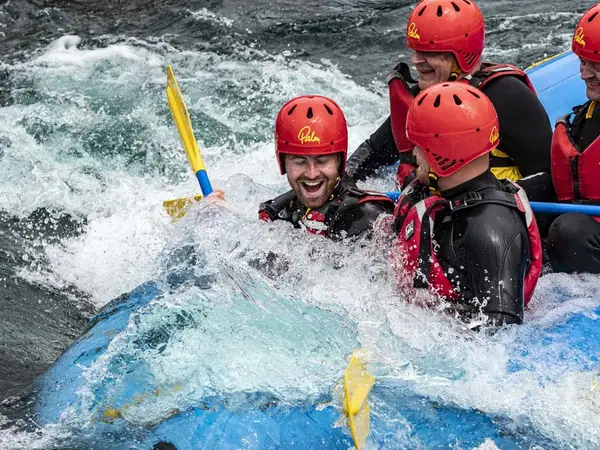
Cardiff International White Water (CIWW) opened in March 2010 in the Sports Village on the edge of Cardiff Bay, and its great virtue is that it does not care about the weather. Pumps push water round a hairpin course about 250 m long with a 3.9 m drop, so you get the same rapids in a drought as in a wet February. A conveyor carries rafts back to the top, and it can feel more like a very violent theme park ride than a river, which for many first-timers is exactly the appeal.
- White Water Rafting: £65-£67 per person depending on the session, with Extreme Friday on the fastest water at £67, about two hours including kit and briefing, age 12 and up.
- Family White Water Rafting: £37 per person, age six and up, on calmer flows. Runs on Wednesday evenings and Sunday mornings and sometimes in school holidays.
- Related sessions: family tubing, hot dogging in inflatable kayaks and an indoor wave for body boarding (£35).
Rafts take up to six, and small groups may share with strangers. Bring swimwear, a towel and a £1 coin for the lockers. Wetsuit, boots, helmet and buoyancy aid are included. Book online, as availability shows live and popular sessions fill.
Llangollen and the River Dee
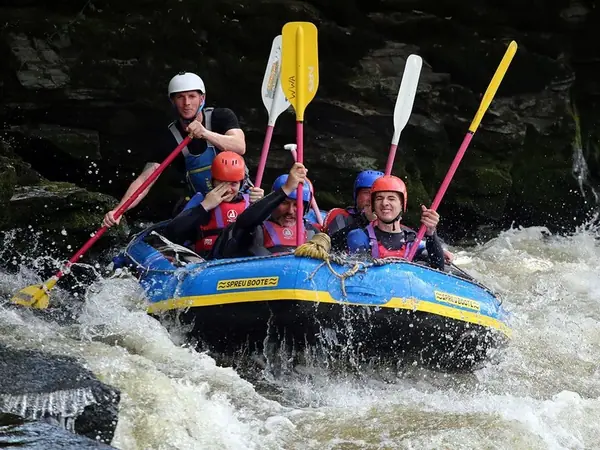
The Dee through Llangollen is the most scenic of the Welsh rafting runs and the most forgiving. It is a real river with real rocks. Expect mostly grade 2-3 water, with its hardest rapids rated up to grade 4. It suits families and groups who want fun with less intensity than the Tryweryn. Several companies operate here, and these three all have low minimum ages.
- Whitewater Active, on Bridge Street: 2.5 hours from £60 with all kit, age eight and up, 120 kg limit, seven days a week. Also offers river bugs (one-person inflatables) from £60, age 12 and up.
- Bearded Men Adventures: 2.5 hours from £60, age eight and up, starting from its activity hub on the A539 about four minutes' drive from town, rather than the Parade Street office. Also runs river tubing from £60, age 12 and up.
- TNR Outdoors, at Mile End Mill: the cheapest here at £45 for two hours, in rafts of six to eight, age seven and up with an adult. The session may move elsewhere if the river is too high.
Unlike the Tryweryn, the Dee is not dependent on a single release, which is why operators advertise it all year. It is still a river: after heavy rain it can be big and brown and in a dry spell it thins out, so a trip in August feels quite different from one in January. Ask what the level is doing when you book.

Other rivers: the Teifi and the upper Wye
Two rain-fed rivers round out the picture, and both are for people who are flexible about dates.
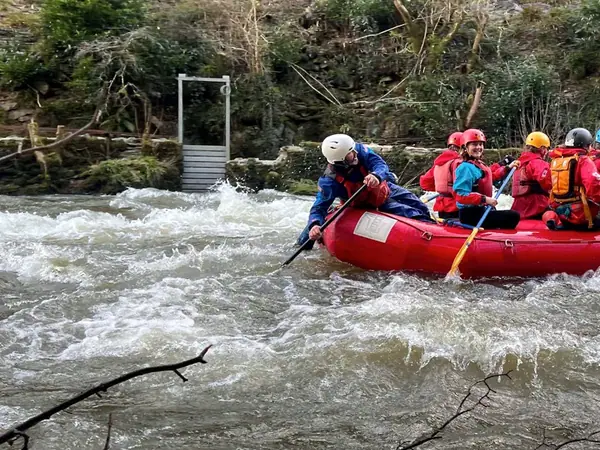
Adventure Beyond, based at the Scout Hall Boat House in Cardigan, rafts the River Teifi from Llandysul to Henllan Falls through grade 2-4 rapids on a three-hour trip. It costs £60 per person with a minimum of six. If the levels are too low the group switches to white water tubing (£55), which is arguably just as entertaining. It suits a trip to Ceredigion and Cardigan Bay.
Black Mountain Activities, near Three Cocks, rafts the upper Wye near Builth Wells from October to the end of March only. This is the most adult of the Welsh options, with a minimum age of 16 and a 115 kg limit, at £70 for a day of about four to five hours. Suitable levels use small two to three-person inflatable rafts; high water brings out traditional six to eight-person boats; low water means a switch to a backup such as a gorge walk. At least six people must be booked.
What a trip actually feels like
The nerves peak in the car park, while you wrestle into a damp wetsuit. Then comes the safety briefing, which is worth listening to: how to sit, how to hold the paddle so you do not break a neighbour's teeth, what "get down" means and what to do if you go in. Your guide sits at the back, steers and calls the commands, and your job is to paddle hard when told.
The first rapid usually gets a shriek and a face full of cold water, and after that the group starts to work together. On the Tryweryn the pace barely lets up, and on a three-run session your arms will know about it. In Cardiff the waves are bigger and more regular, with a lift back to the top instead of a walk. On the Dee there is time to look up at the valley between drops. Falling in is part of the deal on every one of them, usually brief and more funny than frightening, but expect it.
Ages, weights and fitness
Minimum age is the rule most likely to catch out a family. None of these operators publishes a minimum weight, though a buoyancy aid must fit properly, so ring ahead for a small child. What they do publish is a ceiling.
| Operator | Min age | Max weight | Other limits |
|---|---|---|---|
| National White Water Centre | 12; Safari 10; Orca 16 | 115 kg (18 st) | Chest up to 130 cm; must swim 25 m |
| CIWW | 12; Family 6 | Not stated | Confident in and around water |
| Whitewater Active | 8; river bugs 12 | 120 kg | Children and parents share a raft |
| Bearded Men | 8; tubing 12 | Not stated | |
| TNR Outdoors | 7 | Not stated | Children with an adult |
| Black Mountain | 16 | 115 kg (18 st) | Minimum 6 people |
At the National White Water Centre there is no upper age limit: people as old as 90 have rafted there. You do need moderate fitness and must be able to swim. Rafting is not recommended in pregnancy, and anyone with a heart, back or other medical condition should talk to their doctor and the operator first. Tell the guide about asthma or diabetes and hand over an inhaler or medication before you launch, as they can keep it dry on the raft.
What to wear and bring
You will be wet from head to toe, so dress accordingly.
- Wear: swimwear under the wetsuit. Avoid anything you would mind losing, and tie back long hair.
- Footwear: provided at Tryweryn and CIWW. On the Dee and Wye, bring old trainers or shoes with a solid sole that can get wet. TNR specifically rules out sandals, flip-flops and Crocs.
- Bring: a towel, a full change of clothes, a warm top for afterwards, a snack and something to drink. A £1 coin at CIWW.
- Leave behind: jewellery, watches and phones. GoPros are banned at the National White Water Centre for safety reasons, but an on-site photographer sells pictures of your run.
- Glasses: use a retaining strap, or contact lenses if you can.
When to go
For water that does not depend on rain or a dam, go to Cardiff, which runs all year. For the Tryweryn, summer is the safest bet, and dry spells are actively good news; check the release calendar and be ready to move your date in late autumn and winter. The Dee runs all year, at its liveliest after rain, and the Teifi and upper Wye are at their best from autumn to spring when the rain arrives. The water is cold in every month, so a wetsuit is not optional anywhere, and in winter ask what extra layers are available. For the coast and the hills, the Cardiff forecast and the wider Wales weather will tell you what the day will do.
Safety on the river
Guided rafting is tightly run, and the rules exist for sound reasons. If you end up in the water, lie on your back with your feet pointing downstream and toes up, hold on to your paddle, and do not try to stand: a foot trapped between rocks in fast water is the classic serious injury. Listen for your guide and swim for the raft or bank when told. Cold water makes everyone gasp at first, so give yourself a moment to get your breathing back.
Do not attempt any of these rivers in your own inflatable. They need proper boats, helmets and skills, and access on the Dee and much of Wales is restricted. Our kayaking and canoeing guide covers access rules and how to learn. In an emergency, dial 999.
Getting there and combining it with other things
CIWW is the easiest by public transport. Cardiff Bay station is roughly 2.4 km away in a straight line, but the walk around the water is longer, so a taxi from there or from Cardiff Central is simplest. Stay at one of the hotels in Cardiff and spend the rest of the day around Cardiff Bay or at Cardiff Castle.
For the north, the TrawsCymru T3 bus runs between Wrexham, Ruabon station, Llangollen, Corwen, Bala, Dolgellau and Barmouth, so Llangollen is easy without a car. We could not confirm a bus that stops at the Tryweryn centre, so plan on a taxi from Bala. Traveline Cymru (0800 464 0000) has current times.
Llangollen pairs naturally with the Pontcysyllte Aqueduct, where you can walk or canoe the towering canal crossing the same day, and the rest of North East Wales is close by. From the Tryweryn, Bala Lake and Southern Eryri (Snowdonia) are on the doorstep, and it is an easy drive to hotels in Betws-y-Coed for a weekend of mountains and rapids. Thrill-seekers can add the zip lines at Zip World Velocity to the same trip.
White water rafting in Wales: where to go
8 of 8 places. Filter by region or type, or search by name or town.
Tryweryn
 Dam-released rafting river
National White Water Centre (Canolfan Tryweryn)
The benchmark Welsh rafting run, with grade 3-4 rapids on water released from Llyn Celyn. Check the water level page before travelling, as releases are confirmed only days ahead.
Rapid Session £45-£54; Ultimate £63-£84 (2026)
Canolfan Tryweryn, Frongoch, Bala, LL23 7NU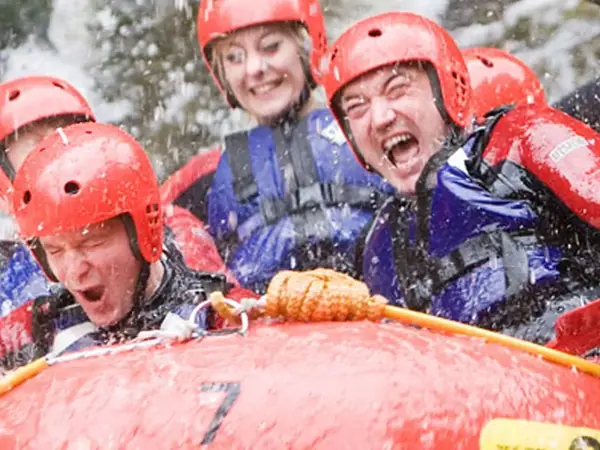 Rafting sessions on the Tryweryn
Bala Adventure and Watersports
Lakeside centre selling Tryweryn taster, full and safari sessions, a useful alternative when you are already staying at Bala. Minimum age 12, or 10 for the safari.
Taster from £60; full session from £95
Bala Lake Foreshore, Bala, LL23 7SR
Cardiff
 Pumped artificial course
Cardiff International White Water
Weather-proof rafting on a 250 m pumped course with a conveyor back to the top. Family sessions take children from age six.
Standard £65-£67; family £37 (2026)
Watkiss Way, Cardiff Bay, CF11 0SY
Llangollen and the Dee
 Dee rafting and river bugs
Whitewater Active
Town-centre operator on grade 2-3 water, seven days a week, with parents and children in the same raft from age eight. Weight limit 120 kg.
From £60
Bridge Street, Llangollen, LL20 8PF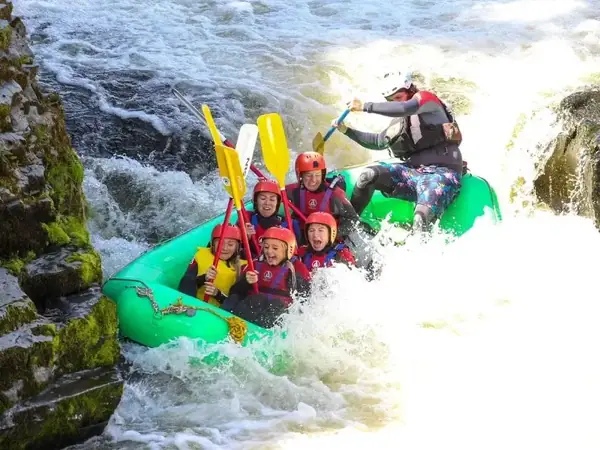 Dee rafting and tubing
Bearded Men Adventures
2.5-hour rafting from age eight and river tubing from 12. Sessions start at the hub on the A539, not the Parade Street office.
From £60
Activity Hub, A539, Llangollen, LL20 8RZ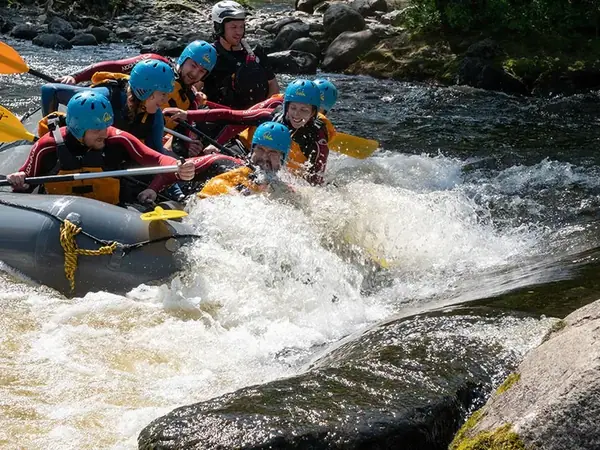 Dee rafting, canoe and kayak
TNR Outdoors
The lowest entry price on the Dee, with two-hour sessions from age seven when accompanied by an adult. The session may move if the river is too high.
£45 per person
Mile End Mill, Berwyn Road, Llangollen, LL20 8AD
Teifi and upper Wye
 Teifi rafting and tubing
Adventure Beyond (Cardigan Bay Active)
Three-hour trips from Llandysul to Henllan Falls through grade 2-4 rapids, swapping to tubing when levels are low. Minimum group of six for rafting.
Rafting £60; tubing £55
Scout Hall Boat House, The Strand, Cardigan, SA43 1EX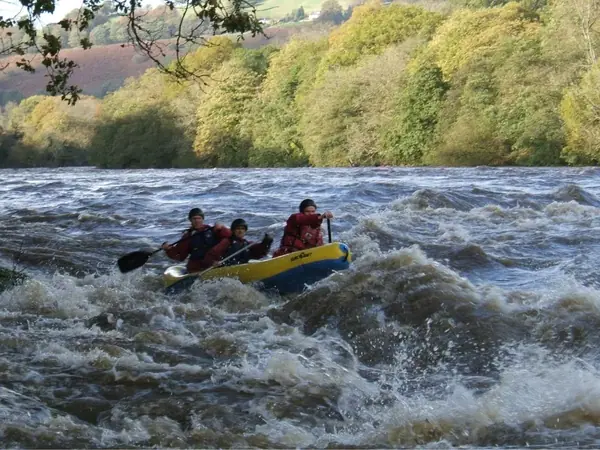 Upper Wye winter rafting
Black Mountain Activities
Runs on the upper Wye near Builth Wells from October to the end of March only, for over-16s. At least six people must book, and low water means a switch to another activity.
£70 per person
Three Cocks, Brecon, Powys, LD3 0SD
White water rafting: guided experiences
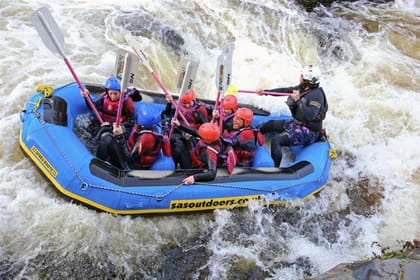 2 h 30 minLlangollen: River Dee Whitewater Rafting Adventure4.9(23)from£65
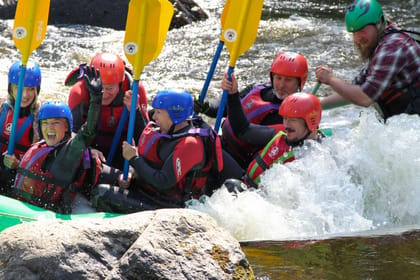 3 hoursLlangollen: White Water Rafting Adventure4.9(56)from£65
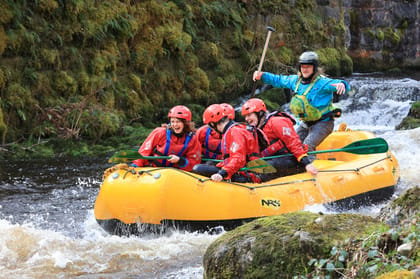 2 hoursBala, North Wales: Ultimate Rafting Experience5.0(4)from£75
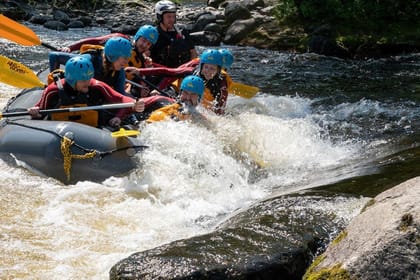 2 hoursLlangollen: River Dee Whitewater Rafting Adventure4.9(8)from£45
Prices and availability from GetYourGuide. We may earn a commission if you book.
White water rafting in Wales on video
White water rafting in Wales: questions people ask
What is the minimum age for white water rafting in Wales?
How much does white water rafting cost in Wales?
Is the River Tryweryn always running?
Can you go rafting in Wales in winter?
Do I need to be able to swim to go rafting?
What should I wear for white water rafting?
Which is better, the Tryweryn or Cardiff?
More sport in Wales


