
Kitesurfing in Wales: beaches, winds, schools and the rules
From the big-air bay at Rhosneigr to the summer kite zones at Newgale: which Welsh beach works in which wind, who teaches, what it costs and the local rules that catch visitors out.
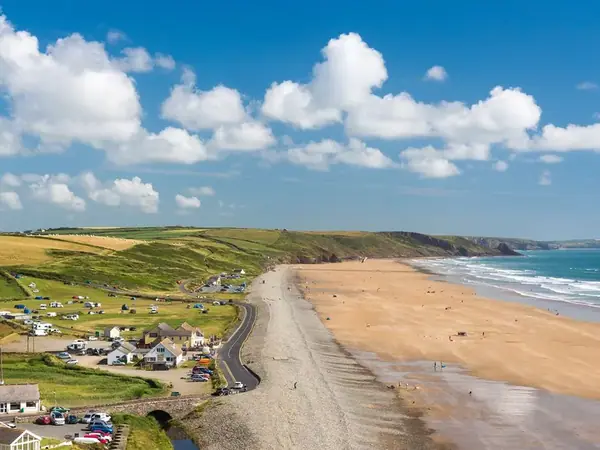
Pembrokeshire's kite map for Newgale fits on a single page and says more about Welsh kitesurfing than most magazine features. It marks where to launch and land, keeps kitesurfers out of the two flagged bathing zones for 200 m offshore, closes those zones to kites in July and August, and says no kitesurfing for two hours either side of high tide, because the sand that looks limitless at breakfast can be a thin strip under a pebble bank by lunchtime.
That is the bargain in Wales. The wind is plentiful and the Atlantic swell lands unfiltered on the west-facing beaches. In exchange you get big tides, proper rips, cold water and a patchwork of local rules that changes from one county to the next.
Where to go at your level
Most of the famous Welsh spots are not places to learn on your own. Hell's Mouth, Freshwater West and Rhosneigr on a big day are for riders who can self-rescue without thinking about it. Beginners do better booking a school, which will pick the beach on the day to suit the wind.
| Your level | Where to start | Why |
|---|---|---|
| Complete beginner | A school at Newgale, Rhyl, Rhosneigr or Porthcawl | Instructors choose the launch, the tide window and the kit |
| Newly independent | Broad Haven in a south-westerly | Flatter water on the right day and room to practise. Gwynedd's power kite rule (see below) counts out Abersoch and Black Rock Sands from March to November |
| Confident intermediate | Rhosneigr, Borth, Newgale outside the summer restrictions | Cross-shore wind, chop and small waves, with currents to respect |
| Advanced wave rider | Hell's Mouth, Freshwater West, Llangennith | Powerful shorebreak, rips and reefs, with little shelter |
| Windsurf or wing learner | Dale, Plas Menai, Abersoch, Llyn Tegid | Sheltered or flat water and RYA teaching |
Which wind works where
The prevailing wind across west Wales is from the south-west, and most beaches below face somewhere between south and west, so anything with east in it is usually blowing offshore. Three places reverse that. Abersoch and Dale face east, so a westerly is offshore there, and Rhyl faces north, so a southerly is. Work it out from the way the beach faces every time: an offshore wind carries a rider with a broken line or a dropped kite out to sea. Pembrokeshire's published kite guidelines say plainly not to kitesurf in offshore winds, and that holds for the whole coast.
| Beach | Works best in | Treat with caution | Tide note |
|---|---|---|---|
| Rhosneigr | SW to NW, best on S with swell | E, NE (offshore) | Rideable at any state; mid tide is cleanest, high tide leaves little room to rig |
| Hell's Mouth (Porth Neigwl) | W through to S | NE (offshore), N and E (cross-offshore) | Steep and deep at high water |
| Abersoch main beach | Windsurf and wing: E to SE (onshore) | W, SW, NW (offshore and gusty). Power kites: see Gwynedd rule below | Gently shelving; less room at high water in summer |
| Black Rock Sands | Windsurf and wing: S to W | N, NE, E (offshore). Power kites: see Gwynedd rule below | Strong currents, a fast tide over the sandbanks and caves that trap people |
| Harlech | SW to NW | E, NE, SE (offshore) | Huge at low water; strong currents |
| Borth | SW to NW | E, NE, SE (offshore) | Good at most states of tide; strong rips |
| Newgale | S for size, N for flatter water | Anything from the east, including SE | No kitesurfing 2 hours either side of high water |
| Broad Haven | WSW to SW; S is gusty but usable | E, NE, SE (offshore) | Gently shelving; county two-hour high tide code applies |
| Freshwater West | S to SW | E, NE (offshore), and any big swell if you are unsure | Check tide times; a reef sits at the south end |
| Llangennith | SW and W; S runs along the beach | E, NE, SE (offshore or cross-offshore); N to NW shrinks the waves | Incoming tide gives the cleanest wave faces |
Treat this as a starting point drawn from windsurf and kite spot guides, not a guarantee. Local topography bends the wind, and a forecast of 18 knots on a model can arrive as 10 and 28 in alternating gusts behind a headland. Check a live reading, then talk to whoever is already rigged on the beach.
Anglesey and the north coast
Rhosneigr
The village on the west coast of Anglesey is the capital of Welsh wind sports, with a reputation for big-air kiting and wave sailing. The bay faces south-west, the beaches are Traeth Crigyll and Traeth Llydan, and the combination of a south wind and running swell is what draws riders from across Britain. The Rhosneigr Wave Classic, with FunSport as its event contact, had a window of 11-20 September in 2026.
Local knowledge counts here. At high tide the recommended place to rig is the southern end near FunSport, where there is more space, before riding downwind to the waves. North of the bay, towards the rock known as Starvation Island, the water flattens and suits kitefoil and wing foil. A strong rip runs at the southern end. Rocks appear at mid to low tide and are covered at high water, so walk the beach before you ride a session on the push. At the north end, by the dunes, a river can cut across the sand at mid tide and make it awkward to walk back with a landed kite.
Parking on Glan-y-Mor Road and Beach Road is limited and fills early. There is a pay-and-display car park with toilets about 500 m from the end of Glan-y-Mor Road, and parking restrictions apply to campervans and motorhomes, so do not plan on sleeping in the van by the beach. For conditions on the island before you set off, see the Anglesey weather page.
Rhyl and the north coast
Rhyl has long, flat sand and is easy to reach by road and rail. Pro Kitesurfing School works from a beachfront base on East Parade and moves lessons to Black Rock Sands or Newborough on Anglesey when the wind direction demands it. Given Gwynedd's rule below, ask where a March to November session will run. It teaches to IKO (International Kiteboarding Organization) standards rather than the British Kitesports scheme. The beach faces north, so a southerly here is offshore.
Llŷn, Hell's Mouth and Tremadog Bay
Abersoch
Abersoch main beach sits on the sheltered, east-facing side of the Llŷn Peninsula, with gently shelving sand and a marked exclusion zone for motorised boats. It is sheltered water and a natural base for windsurf and wing lessons, but the council's beach guide bars power kites here from March to November. Hydro Abersoch, an RYA Training Centre on the main beach, runs windsurfing tasters for absolute beginners, and Abersoch Watersports in the village teaches wing foiling as an RYA centre. In peak summer the beach is packed with families and boats, so go early or go in the shoulder months.
Hell's Mouth (Porth Neigwl)
The name is a sailor's warning, and it has earned it. Four miles of sand and pebbles face south-west across open water, and the official beach notice lists strong currents, large breaking waves, a steep shelving beach with deep water at high tide, unstable boulder clay cliffs and, for good measure, power kites. Windsurf guides say flatly it is no place for beginners. Westerlies round to southerlies are the kiting directions, and the reef at the right-hand end of the beach produces the best wave sailing. Getting back through the shorebreak on a big day is the real test.
Black Rock Sands (Morfa Bychan)
A vast beach near Porthmadog where you can drive onto the sand, under a 10 mph limit, in season. It looks made for kiting, but the council's beach guide bars power kites from March to November and its current beach notice still warns about them. There is also a designated zone for motor boats and water bikes, manoeuvring cars, strong currents, a fast tide over the sandbanks and caves where people get cut off. If you ride here from December to February, set up well away from the vehicle lanes and the powered craft launch.
Harlech
Below Harlech Castle the beach runs for miles, reached by a 400 m path from the car park near the railway crossing. We found no school based here, so it suits independent riders who want space in a south-westerly to north-westerly. The dunes behind are a National Nature Reserve and Site of Special Scientific Interest: rig on the sand, not in the dunes. The council's safety notice warns of strong currents, large breaking waves and powered craft.

Cardigan Bay: Borth and Ynyslas
Borth's long straight beach, north of Aberystwyth, faces due west and takes north-westerlies and south-westerlies well, with fairly good slalom or wave conditions at most states of the tide. It is an intermediate venue: rips can be strong, and it is not recommended for beginners. The railway station is a few minutes' walk from the sand.
At the northern end the beach runs into Ynyslas and the Dyfi National Nature Reserve, managed by Natural Resources Wales. Ceredigion's tourism site calls it a favourite with wind and kite surfers but warns of very strong tidal currents. The dunes, saltmarsh and estuary are protected, parts may be cordoned off for plants or nesting birds, and we found no published kite zone. Keep off the dunes, stay clear of roosting birds and read the reserve signs. The visitor centre is unstaffed, so put questions to Natural Resources Wales before you travel.
Pembrokeshire
Newgale
Almost two miles of sand backed by a pebble bank thrown up in a storm in 1859, on the coast road between Haverfordwest and St Davids. It is the county's main kite beach and home to The Big Blue Experience, which teaches kitesurfing and kite landboarding beside the sand. Southerly winds bring the biggest swell, while a northerly gives flatter water. Cross-shore currents strengthen as the waves build, and windsurf guides say it is not for beginners. Do not ride when the tide is up on the shingle: gear gets wrecked there, and the map forbids launching or landing from the bank.
Broad Haven
A west-facing bay with gently shelving sand, flat-water patches and, in a west-south-westerly to south-westerly, some of the most forgiving conditions on this coast. A southerly is gusty but sailable, and locals use it when Newgale is too big. Pembrokeshire's bathing water byelaws, which include a speed limit, apply to the water off Broad Haven North, and National Park byelaws cover the foreshore. Haven Sports on Marine Road sells windsurfing kit, wetsuits and accessories if you have forgotten something.
Dale
Dale is a mainly pebble beach in a sheltered bay, so it is better for windsurfing and wing than for launching a kite. It faces east, which makes a westerly offshore. North and north-westerly winds funnel down the Gann and arrive strong and gusty, while light days give flat, clean water at all states of the tide. Watch for small rocks in the Gann at low water springs.
Freshwater West
The county's best surf beach, on the exposed south-west corner, and one for experienced riders only. Strong rip currents run off the beach, a rocky reef sits at the southern end, and the neighbouring Frainslake sands lie inside the Castlemartin military ranges and are out of bounds. Two small free car parks fill quickly when the surf is up. South to south-westerly winds bring the swell. Do not block field gates or the emergency access.

Gower and Glamorgan
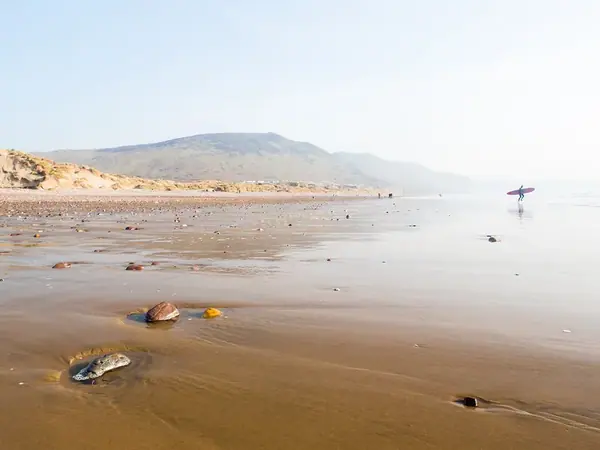
Llangennith sits at the northern end of the huge west-facing sweep of Rhossili Bay, which takes the full force of Atlantic weather. Spot guides praise south to south-easterlies for clean wave faces on an incoming tide, but on this west-facing beach a south-easterly is cross-offshore, so do not kite in it. South-westerly to westerly winds are the safer directions, and a north to north-westerly shrinks the swell into something more manageable. Parking is via Hillend campsite. We found no school based on the beach, so come with your own kit and a riding partner.
Further east, Visit Bridgend lists Blast Kiteboarding in Porthcawl as a kite school and store working closely with British Kitesports and the Student Kite Association, founded by one of the early kiters at Rest Bay. It is the obvious first call from Cardiff or Bristol, but ring to confirm this season's lessons.
Tides and how they change a session
Tidal range is the factor visitors underestimate. The Bristol Channel has one of the highest ranges in the world, about 15 m at its head in the Severn Estuary, and the effect is felt on the Gower and Glamorgan beaches, where a flat low-tide beach can vanish in a few hours. Further north the range is smaller but still matters: Hell's Mouth is steep, with deep water at high tide.
- Know high water before you leave home. Use the official Admiralty EasyTide service for the nearest port.
- Plan for the falling tide. Beaches get wider and safer as you ride, while a rising tide takes your launch space and your escape route.
- Respect the two-hour rule in Pembrokeshire. The county's guidelines ask kitesurfers to stay off the water for two hours either side of high tide, and land kiters for three hours at Newgale.
- Wind against tide stands up steep, confused water, particularly around headlands and estuary mouths.
Beach rules, kite zones and seasonal restrictions
There is no single Welsh kite law. Rules come from county councils, the national parks and landowners, and they are posted on beach noticeboards, which is where you should read them. Pembrokeshire is the best documented.
The wider Pembrokeshire kite code asks flyers to keep a 90 m downwind safety zone, keep 90 m from other water users, stay clear of flagged bathing areas, avoid jumping close to the beach and carry proof of third-party liability insurance. Non-kiters are asked to stay 50 m from a flying kite.
We found no kite-specific rule for Hell's Mouth or Harlech, or from Ceredigion for Borth and Ynyslas, but that is not proof there is none: the signs on each beach have the final word. Wherever you are, assume the lifeguard flags are a hard boundary from late spring to early autumn and that nature reserves such as Morfa Harlech and Ynyslas mean staying off the dunes.
The beginner route: from first lesson to riding alone
Kitesurfing is not a sport to teach yourself. A sensible path looks like this:
- Find a qualified school. The British Kitesports school finder map was broken in November 2026, so ring the association on 01305 813555 for schools near you. Some Welsh schools teach to IKO standards instead, so ask who certifies the instructors and what the school's insurance covers.
- Book at least two days. The first is mostly kite control and safety systems on the beach. Big Blue at Newgale lists one- and two-day beginner, improver and wave-riding lessons at £130-£250, for ages 13-70 with all kit supplied. Its two-hour kite landboarding sessions at £45 per person are a cheap way to learn how a kite behaves.
- Learn the self-rescue. Before you ride independently you should be able to release, secure the kite and get back to the beach without help.
- Join British Kitesports. Standard membership is £52 a year (students £44, juniors £38) and includes third-party liability and personal accident cover, which many beaches and clubs expect.
- Ride supervised for a while. Keep to flat water, onshore or cross-onshore wind, and a falling tide. Rhosneigr can wait until you can stay upwind without trying.
Windsurfing and wing foiling
The RYA's teaching scheme makes windsurfing the easier sport to start in Wales. Plas Menai, the national outdoor centre near Caernarfon, runs RYA Start Windsurfing over two or five days on the sheltered Menai Strait, along with wing foil courses. Hydro Abersoch offers a one-hour beginner taster. At Bala, Llyn Tegid has no tide at all: a sailing or windsurfing permit is £5 a day, £25 a week or £50 a year from the foreshore pay-and-display machines, and Bala Adventure and Watersports teaches and hires on the shore. The permit page does not mention kitesurfing, so ask the Eryri National Park lake office before rigging a kite there.
Wing foiling is the fast-growing newcomer, and it needs less beach than a kite. FunSport at Rhosneigr lists two-hour group wing lessons at £100 per person for over-16s and one-to-one lessons at £140 (November 2026). Abersoch Watersports also teaches it, and the flat water north of Rhosneigr bay is popular with foilers. British Kitesports membership covers wing surfing and wing foiling. For more paddle-powered ideas on the same coast, see our kayaking guide or the page on sailing in Wales.
Safety
- Offshore wind: do not go. It is the quickest way for a small problem, such as a broken line, to become a Coastguard callout.
- Rips: Hell's Mouth, Freshwater West, Borth and the south end of Rhosneigr all have them. If you are in one with a dead kite, do not swim against it.
- Cold water: the Welsh sea can cause cold water shock even on a warm day. Wear a full wetsuit with boots, gloves and a hood outside high summer.
- Never ride alone. If you must, tell someone where you are going and when you will be back.
- Lost kit: report a lost kite or board to the Coastguard, or an empty kite in the water may trigger a full search.
- Emergency: call 999 or 112 and ask for the Coastguard.
When to go and what to pack
Pembrokeshire's outdoor charter notes that wind and surf are most reliable outside the summer months, which matches experience across Wales. September to November and March to May bring the best mix of wind and tolerable water. Winter is for hardened locals in 5-6 mm wetsuits. Summer has the warmest water and the most schools running, but also lighter winds, lifeguarded zones and full car parks.
Bring a harness, helmet, impact vest, a quick-release you trust, a spare line set and at least two kite sizes. Do not count on local kite hire.
Getting there and where to stay
A car is close to essential once you are carrying kites, but the train does reach several spots. Rhosneigr and Rhyl are on the North Wales Coast line, which closes in stages in early 2027: no trains between Chester and Holyhead on 9-29 January, and Llandudno Junction to Holyhead stays shut until 5 February. Harlech is on the Cambrian Coast line, where all Pwllheli trains have started or finished at Machynlleth since 19 October 2026, and Borth is on the line to Aberystwyth. Check trains in Wales before you go. In Pembrokeshire, the only coastal buses until 28 May 2027 are the 387/388 Coastal Cruiser on Thursdays and Saturdays, so confirm the road services along the A487 with Traveline Cymru on 0800 464 0000.
For Newgale and Broad Haven, base yourself around hotels in St Davids. For Freshwater West, Tenby is a comfortable drive. Anglesey riders can stay near Caernarfon, Borth is close to hotels in Aberystwyth, and Swansea works for Llangennith. The full range of other activities is on our sport activities overview.
Kitesurfing and windsurfing in Wales: where to go
21 of 21 places. Filter by region or type, or search by name or town.
Anglesey and north coast
 Kite, windsurf and wing beach
Rhosneigr (Traeth Crigyll and Traeth Llydan)
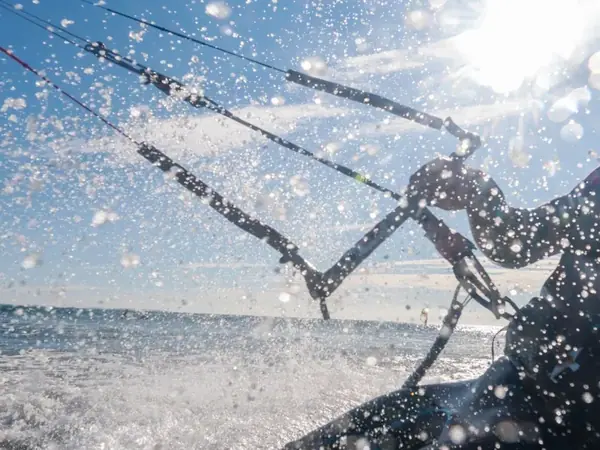
Wales's best-known wind sports bay, working from south-west to north-west and best on a southerly with swell. Strong rip at the south end and rocks covered at high tide: walk the beach first.
Beach Road, Rhosneigr, Anglesey, LL64 5QB- Watersports shop and tuition
FunSport Rhosneigr
Beachfront shop at the south end of the bay, selling kite and windsurf kit and running wing foil tuition. Book lessons by phone or email.
Wing foil: 2-hour group £100 per person (16+), one-to-one £140 (Nov 2026)
1 Beach Terrace, Rhosneigr, LL64 5QB 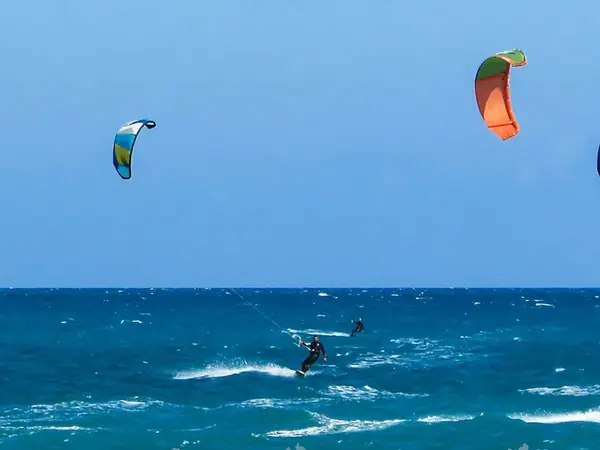 Surf and kite shop, lessons
Gecko Surf
Village shop offering surf, paddleboard and kitesurfing lessons, plus wetsuit and board hire. Ring to check which kite lessons are running.
High Street, Rhosneigr, Anglesey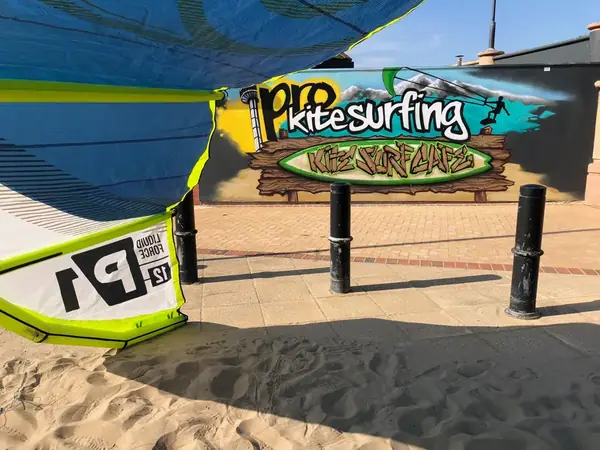 Kitesurfing school (IKO)
Pro Kitesurfing School
Beachfront school teaching individual or two-to-one lessons to IKO standards. Moves sessions to Black Rock Sands or Newborough to suit the wind, so ask where you will ride. A southerly is offshore at Rhyl.
East Parade, Rhyl, LL18 3AQ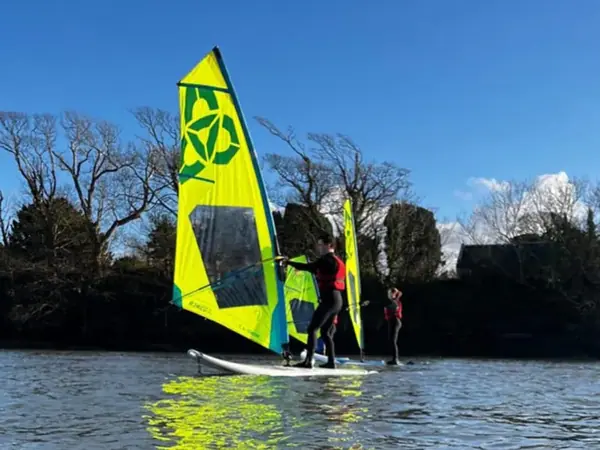 RYA windsurf and wing centre
Plas Menai National Outdoor Centre
The national centre on the Menai Strait, with RYA Start Windsurfing over two or five days and wing foil courses on sheltered water. On-site accommodation makes it a good base for a learning week.
Griffiths Crossing, Caernarfon, LL55 1UE
Llŷn and Tremadog Bay
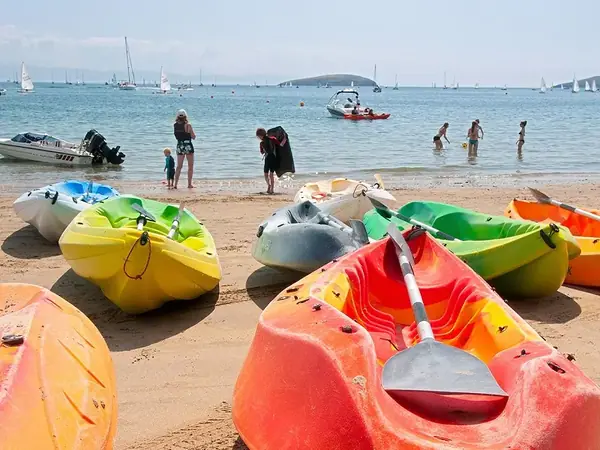 Sheltered windsurf and wing beach
Abersoch main beach
Gently shelving and east-facing, so a westerly is offshore. The council's beach guide prohibits power kites from March to November. Exclusion zone for motorised boats and heavy summer crowds.
Abersoch, Gwynedd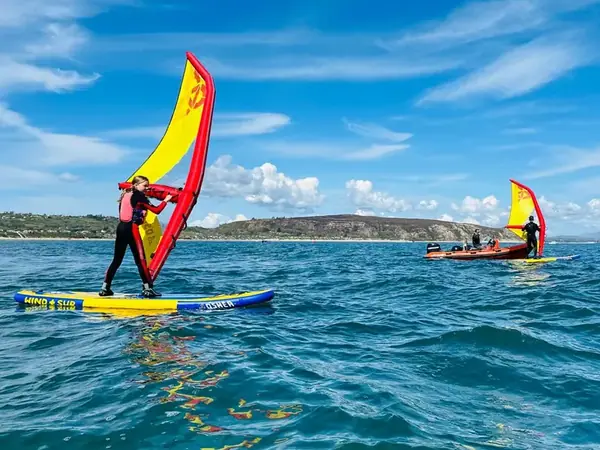 RYA Training Centre
Hydro Abersoch
RYA centre on the main beach, run by Andrew and Danielle Johnson, with one-hour windsurfing tasters for absolute beginners alongside sailing and powerboat courses.
Abersoch main beach, Gwynedd, LL53 7DP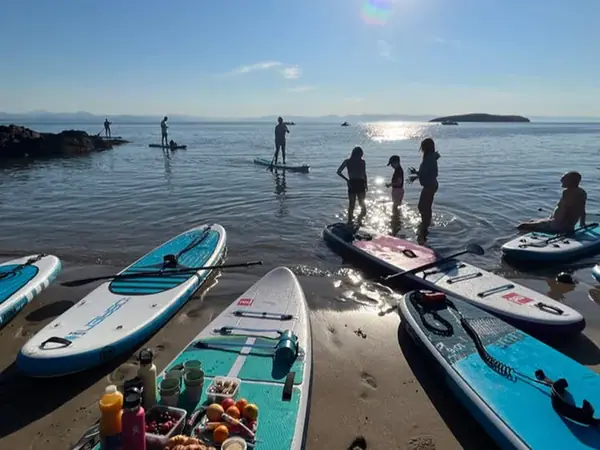 RYA centre, wing foil and shop
Abersoch Watersports
Village shop and RYA Training Centre teaching wing foiling, surf and SUP, and selling wing foil gear.
Unit 1 Pen Y Bont, Abersoch, LL53 7HQ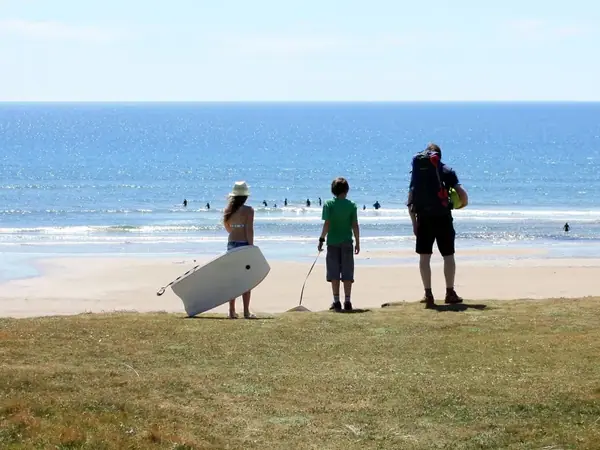 Advanced wave beach
Hell's Mouth (Porth Neigwl)
Four exposed miles with strong currents, a steep shelving beach and heavy shorebreak. Westerly to southerly winds work, but it is no place for beginners.
Porth Neigwl, near Llanengan, Llŷn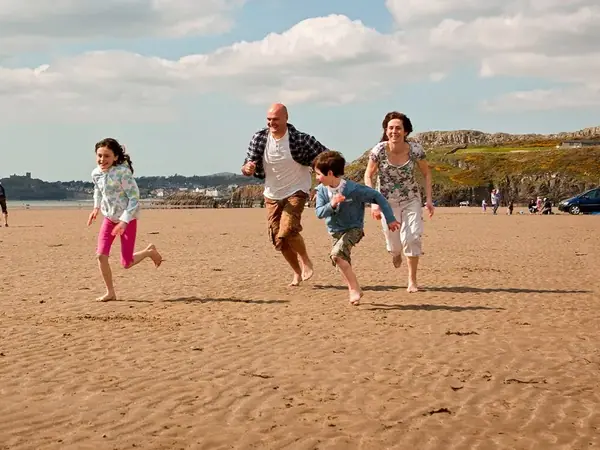 Wide open beach
Black Rock Sands (Morfa Bychan)
Huge beach with vehicles on the sand and a powered craft zone. The council's beach guide prohibits power kites from March to November. Watch the fast tide on the sandbanks and around the caves.
Morfa Bychan, near Porthmadog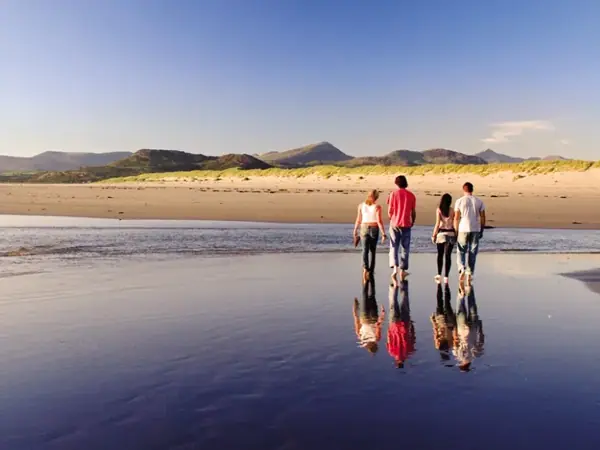 Long west-facing beach
Harlech Beach
Miles of sand below the castle, reached by a 400 m path from the car park. We found no school here. Strong currents, and the dunes behind are a National Nature Reserve: keep off them.
Harlech, Gwynedd, LL46 2UG
Cardigan Bay
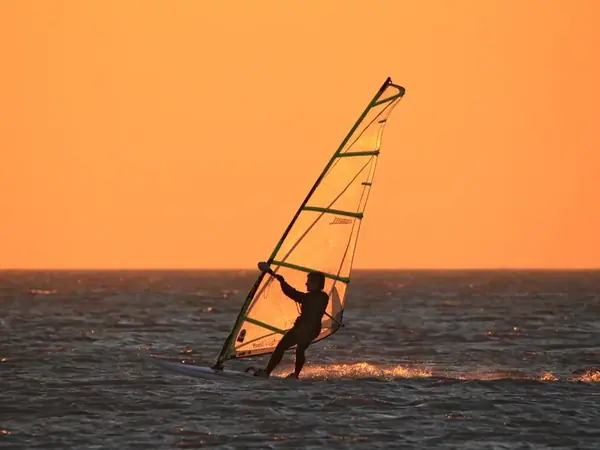 Intermediate beach
Borth Beach
Long west-facing beach that works in north-westerlies and south-westerlies at most states of tide. Rips can be strong, and it is not recommended for beginners.
Borth, Ceredigion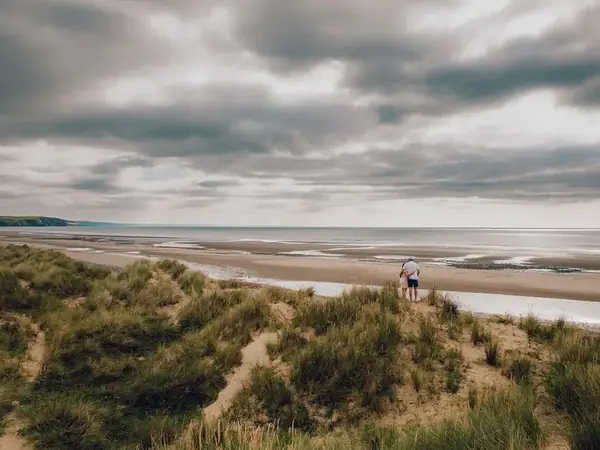 Protected beach and estuary
Ynyslas (Dyfi National Nature Reserve)
The north end of the Borth beach, inside a reserve managed by Natural Resources Wales. Very strong tidal currents. Keep off the dunes and away from birds on the estuary. The visitor centre is unstaffed.
Ynyslas, near Borth, Ceredigion
Pembrokeshire
 Main Pembrokeshire kite beach
Newgale Beach
Almost two miles of sand with a marked kite launch area, summer no-kite zones and no kitesurfing 2 hours either side of high water. Read the beach noticeboard before you rig.
Newgale, Pembrokeshire, SA62 6AS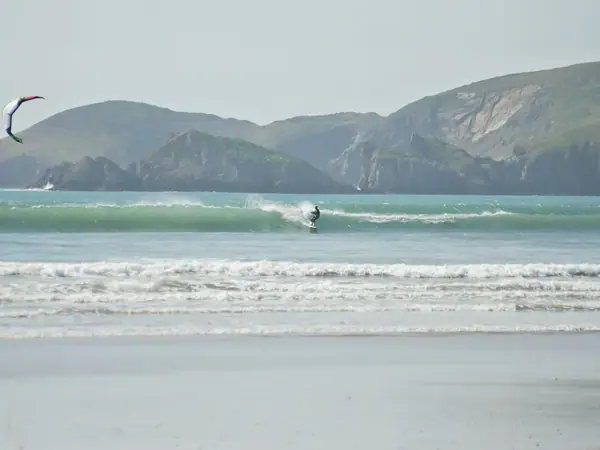 Kitesurfing and landboarding school
The Big Blue Experience
Established school beside the beach, teaching kitesurfing from beginner to wave riding plus kite landboarding, and running British Kitesports instructor courses. Closed January to April.
Kitesurf lessons £130-£250; landboarding £45 for 2 hours
Newgale Beach, Pembrokeshire, SA62 6AS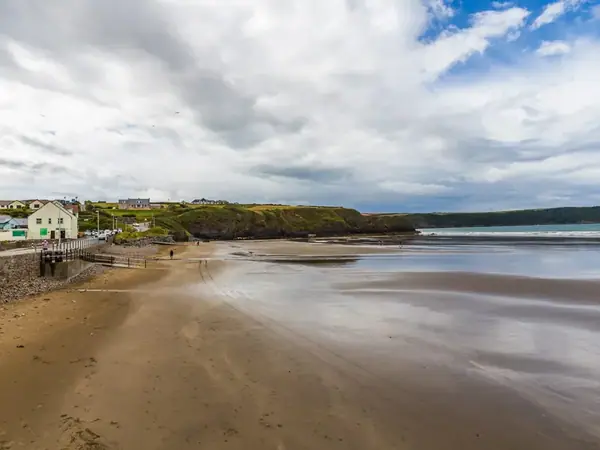 Improver beach
Broad Haven
West-facing bay with gently shelving sand and flat-water patches, best in west-south-westerly to south-westerly winds. Bathing water byelaws, including a speed limit, apply offshore.
Broad Haven, Pembrokeshire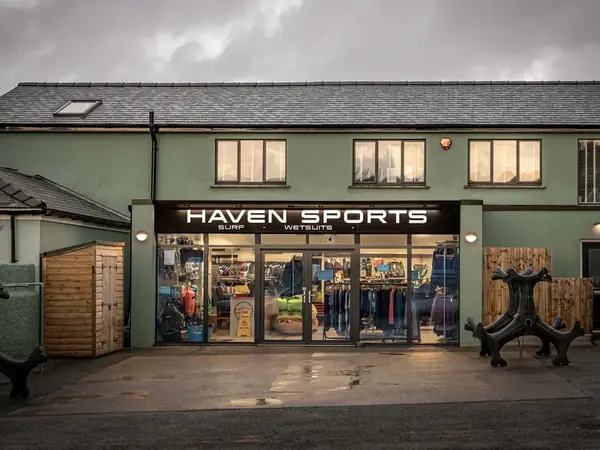 Watersports shop
Haven Sports
Local retailer for windsurfing equipment, wetsuits, boards and accessories, useful when you have left something at home.
Marine Road, Broad Haven, SA62 3JR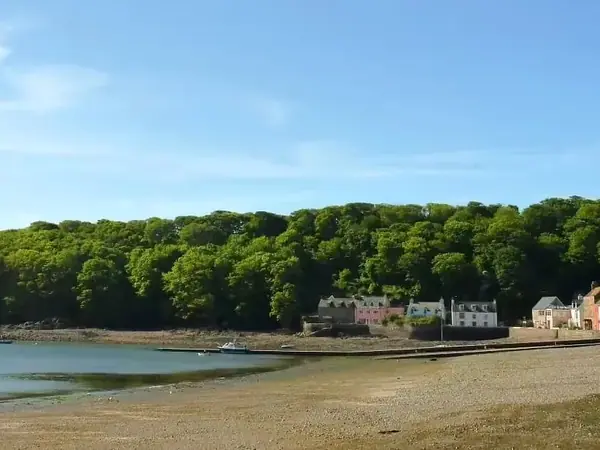 Sheltered windsurf bay
Dale
Mainly pebble beach in an east-facing bay, so a westerly is offshore. Better for windsurf and wing than kites. North-westerlies funnel down the Gann, and small rocks appear at low water springs.
Dale, Pembrokeshire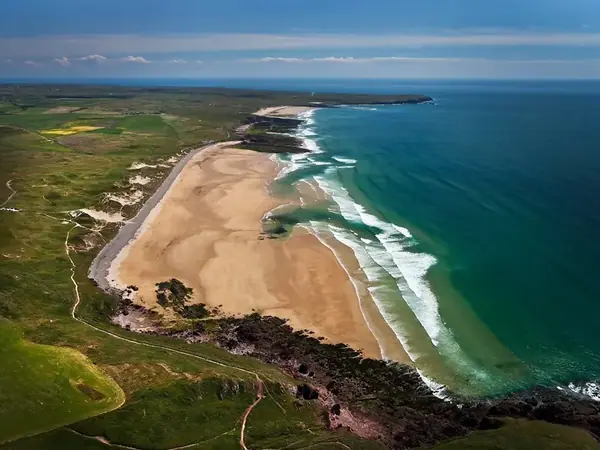 Advanced wave beach
Freshwater West
The county's most powerful surf, with strong rips and a reef at the south end. Neighbouring Frainslake sands are inside the Castlemartin ranges and out of bounds.
Freshwater West, near Castlemartin, Pembrokeshire
Gower and Glamorgan
 Advanced wave beach
Llangennith (Rhossili Bay)
Exposed west-facing beach at the north end of Rhossili Bay, with parking via Hillend campsite. South-west to west winds suit kites; a south-easterly is cross-offshore. Bring your own kit and a riding partner. The map pin marks the village, not the launch.
Llangennith, Gower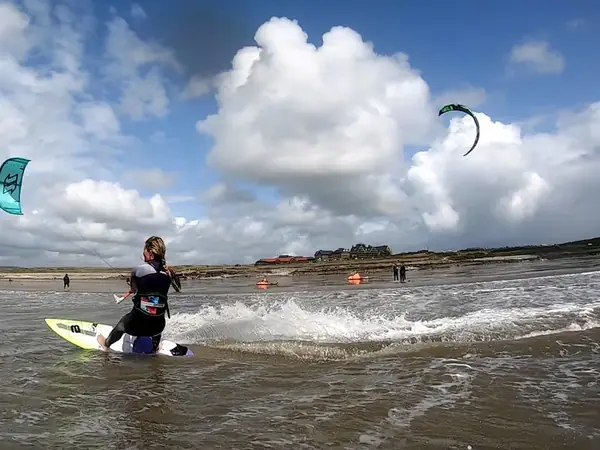 Kitesurf school and shop
Blast Kiteboarding
South Wales kite school and store, listed by Visit Bridgend as working closely with British Kitesports and the Student Kite Association. Ring 07712 831951 to confirm this season's lessons.
102 Newton Nottage Road, Porthcawl, CF36 5EE
Kitesurfing and windsurfing in Wales on video
Kitesurfing and windsurfing in Wales: questions people ask
Where is the best place to kitesurf in Wales?
Can a complete beginner learn to kitesurf in Wales?
How much do kitesurfing lessons cost in Wales?
Do I need insurance to kitesurf in Wales?
Are there kitesurfing restrictions at Newgale?
What wind direction is best for kitesurfing in Wales?
When is the best time of year for kitesurfing in Wales?
Can I windsurf or wing foil instead?
More sport in Wales


