
Climbing in Wales: crags, grades, guides and access rules
From Cenotaph Corner to the Pembroke sea cliffs: where to climb in Wales, who to learn with, what it costs, and the bird bans, firing times and private quarries that shape every trip.
On 24 August 1952 Joe Brown and Doug Belshaw finished a line that had beaten Brown once already, when he retreated from the niche below the crux after dropping his peg hammer on his belayer, Wilf White. Cenotaph Corner, the right-angled groove up the middle of Dinas Cromlech, is still graded E1 5c, still a rite of passage, and still in plain sight of the S1 bus grinding up the Llanberis Pass.
That closeness is the odd thing about climbing in Wales. Some of the most important routes in British climbing sit a few minutes from a bus stop, and yet the country asks more of a visitor than most. Sea cliffs close for nesting auks. A limestone headland in Pembrokeshire belongs to the army. The best-known slate quarries are private land where climbers have been tolerated rather than invited. Plan around those rules and one small country gives you mountain rock, quartzite zawns, limestone and sandstone.
Where to climb: Wales by rock type
Most visitors base themselves around Llanberis and Ogwen in the north or on the Pembroke coast in the south.
| Area | Climbing | Best for | The catch |
|---|---|---|---|
| Llanberis Pass | Igneous mountain trad (rhyolite on the Cromlech), short approaches | Classic routes from V.Diff to E8, history hunters | Limited roadside parking, needs dry weather |
| Clogwyn Du'r Arddu | High, north-facing mountain trad | Experienced leaders in a settled spell | Long walk in, cold and often damp |
| Tremadog | Low-lying dolerite, mostly multi-pitch | V.Diff to E7, a refuge when the mountains are wet | Busy, with loose blocks noted on some routes |
| Cwm Idwal | Slabs and walls in a nature reserve | First multi-pitch routes, winter climbing | Queues on the classics |
| Gogarth, Anglesey | Serious quartzite sea-cliff trad | Competent leaders with abseil and rescue skills | Bird bans, tides, rockfall |
| Slate quarries | Slabs and bolted lines in old workings | Not a public venue: read the access notes first | No landowner permission; Vivian Quarry closed |
| Great Orme and Little Orme | Limestone sport and trad | Sport climbers, dry winter days | Strict seasonal and time limits |
| Pembroke | Limestone sea cliffs, trad | Competent sea-cliff leaders | MoD firing, briefing for Range West, birds, tides |
| Gower | Coastal limestone | Short routes; Three Cliffs suits beginners and clubs | Fast tides, some seasonal bird restrictions |
| South Wales Valleys | Sandstone sport and trad | Quick hits from Cardiff, winter sun | Variable rock, few facilities |
Llanberis Pass and Clogwyn Du'r Arddu
The Pass is the road between Llanberis and Pen y Pass, and its crags stand directly above the tarmac. On the north side are Dinas Cromlech, Carreg Wastad and Clogwyn y Grochan; across the valley is the great apron of Dinas Mot. The BMC records Dinas Cromlech as open access land inside the national park. The real constraint is parking, which the BMC warns can be limited, noting the Sherpa bus from Llanberis as an alternative. The scree approach to the Cromlech is eroding: its suggested line goes up and left from the roadside boulders by a small rib, then back right across the slopes.
Clogwyn Du'r Arddu, always Cloggy to climbers, is a different undertaking. It hangs on the north flank of Yr Wyddfa (Snowdon), a long walk from the road, and it needs a dry spell to come into condition. Brown and Whillans climbed Vember here in 1951, Brown added November in 1957, and Great Wall (E4) is another famous name. The BMC database has an entry for the boulders below the cliff but none we could find for the main crag, so take your approach from a current guidebook, and carry a map and enough daylight for the return.
Tremadog and the Ogwen Valley
Craig Bwlch y Moch at Tremadog is the wet-weather plan of North Wales and a very good crag in its own right. It is owned and managed by the BMC, which is unusual, and offers mainly multi-pitch dolerite from V.Diff to E7 about a mile from Porthmadog. Respect the details that keep it open: do not cross the top fence, and do not descend behind the crag or to the east. Parking is at a glamping site through a paid app, with nearby laybys for those staying longer. Ash dieback has affected the trees here, and the BMC entry carries notes on loose blocks, so read it first.
In the Ogwen Valley, Idwal Slabs rise above Llyn Idwal in one of the grandest settings in Wales. Hope (V.Diff) and Tennis Shoe (HS) are the classics, with Suicide Wall Route 1 (E2) for those who want something much more serious nearby. On a fine weekend expect dozens of climbers on the same few lines, so start early or come midweek. The cwm is a National Nature Reserve: stay on the established paths and leave the vegetation alone.
Gogarth and the Anglesey sea cliffs
Gogarth wraps around Holyhead Mountain at the western tip of Anglesey, and few British cliffs feel as committing. Many routes begin with an abseil or a traverse above the sea, the rock varies from excellent quartzite to something closer to compacted sugar, and escape is rarely simple. It is no place for a first sea-cliff day without an instructor.
The RSPB manages most of the area as a reserve around South Stack, and the restrictions negotiated with climbers are one reason access has survived. Current BMC entries list the following, but read them again before you go, because they can change:
- Red Walls: the whole crag, 1 February to 27 July, for auks and puffins.
- Holyhead Mountain: 1 February to 31 July for nesting birds, with choughs near The Grip. Groups need RSPB permission.
- Main Cliff: Pentathol is restricted from 1 March to 31 July for guillemots. Peregrines have caused temporary closures here too, so look for notices at the gearing-up area and the descent gully.
- North Stack to Easter Island Gully, including Wen Zawn: no formal restriction on most of it, but choughs nest in Wen Zawn (keep the noise down from March to June) and a nest has been found on the last pitch of Dream of White Horses, so move through quickly and do not queue. Seals breed in Parliament House Cave: keep clear from late August to late October. A huge rockfall there in 2017 affected routes, and more are considered likely.
- Castell Helen: no bird restriction listed, though guillemots sometimes use ledges near the first pitches of some routes.
Main Cliff is normally approached from the South Stack car park; for Wen Zawn, the BMC suggests Breakwater Park. Late summer is the prime season, once the cliffs have reopened.
The slate quarries: read this first

The terraces of Dinorwig above Llanberis produced one of the strangest climbing scenes in Britain. From the 1970s climbers explored, bolted and named the abandoned galleries, and Rainbow Slab became famous well beyond Wales. It is extraordinary terrain, but it is not a public climbing venue.
Most of the quarries belong to First Hydro. The BMC's advice is plain: the landowners do not give permission for public access, including climbing, away from the public paths. Security staff may ask anyone beyond them to leave, and the ground has unstable rock, deep drops and old workings. The BMC reports regular rockfalls, including one in April 2025 that badly injured a belayer, lists seasonal bird restrictions in parts of the Rainbow Slab area (1 April to 30 June) and Twll Mawr (1 February to 30 June), and asks groups, especially those over 10, not to gather in any one area.
To see the slate without trespassing, use the public paths through Padarn Country Park. Before considering anything more, read the current RAD entries for the lower and upper quarries: neither gives permission to climb.
The Ormes: limestone above Llandudno
The Great Orme carries some of the hardest and most historic sport climbing in Wales, along with some of the tightest rules. Pen Trwyn sits directly above the Marine Drive, so falling rock is a danger to the road. The BMC lists these limits:
- Upper Pen Trwyn (above the Marine Drive): on Bank Holiday weekends and from 15 July to 8 September, climbing is allowed only after 6pm. Climb only between the green marker posts, never the red, and finish at the BMC lower-offs.
- Upper Pen Trwyn birds: choughs close the Testament to Lyon's Share area and part of Excursion Wall from 25 March to 30 June.
- Lower Pen Trwyn: routes from Jacuzzi Jive to Face Race are restricted from 1 March to 30 July for black guillemots. The tide cuts off the base of the crag, and you should not climb if seal pups are on the beach.
- West Shore crags: no climbing at any time because of their conservation value.
- Little Orme: seasonal closures on some crags for nesting seabirds, including the whole of The Diamond from 1 March to 31 July. Check each crag separately.
Autumn and the dry days of winter are often the best time to come, when the restrictions have lifted and the limestone catches what sun there is.
Pembroke sea cliffs and the Castlemartin ranges

South Pembrokeshire has long, clean limestone cliffs dropping straight into the sea, and hundreds of routes, many reached by abseil. Much of the best climbing lies on the Castlemartin training area, so the Ministry of Defence's timetable governs your day as much as the weather does. Treat it literally: live firing takes place here, and red flags by day or red lamps by night mean you stay out.
Range East: St Govan's and the Stack Rocks area
Access is allowed only outside firing periods, normally weekends, bank holidays and evenings after firing ends, with night firing on some weekdays. Road closures differ by day and by road, and some last 24 hours, so look up the exact date on the MoD Castlemartin firing notice, which also gives the line for daily updates. GOV.UK warns that times can change without notice. The national park's climbing guidance adds some firm rules: read the noticeboards each day, do not climb between red markers during restricted periods, do not belay to MoD property or place stakes (there is unexploded ordnance), and do not climb at Chapel Cove at any time. Many Range East crags also have bird restrictions, generally 1 March to 1 August, and the BMC reports a major rockfall at St Govan's Head in February 2026.
Range West: briefing required
Range West is closed to climbers unless they have attended the annual access safety briefing, as GOV.UK confirms. The BMC publishes the briefing dates, or ask the Castlemartin Ranger. Recent BMC notices have barred under-18s, even with an adult, and pets, so confirm the rules when you book. Briefed climbers may enter only on published non-firing days, and large exercises can shut both ranges for weeks. High explosive is fired here: touch nothing metal and place no belay stakes.
Birds outside the ranges
The park's guidance lists 1 March to 1 August restrictions at Mother Carey's Kitchen at Lydstep (inside the chimney and on several named routes), part of Skrinkle Haven, Needle Rock at Fishguard, Llech Dafad, Penbwchdy, Ogof Mrs Morgan and Dinas Fach. If you are walking between crags, the Pembrokeshire Coast Path is the way to do it.
Gower, Dinas Rock and South Wales sandstone
Gower has short, friendly limestone routes above some of the best beaches in Britain. Three Cliffs Bay is the postcard, reached across a beach where, the BMC warns, the sea comes in very fast, so check the tide table before you cross. Pennard's slabs and the wilder ground at Paviland offer more. Some Gower cliffs have seasonal bird restrictions that are reviewed regularly: Trial Wall, for example, has a partial restriction from 15 April and a full one from 15 June to 31 July for nesting kestrels, lifted once the chicks fledge. Further west, the coast around Rhossili and Worm's Head makes a good rest day.
Dinas Rock, near Pontneddfechan at the edge of Waterfall Country, is among the leading high-grade sport venues in South Wales. Natural Resources Wales manages the north side of the river, and the south side is private: the BMC reports that the owner has withdrawn permission after an agreement limiting numbers was not respected, so do not climb there. It is a protected site (SSSI and Special Area of Conservation), so do not clear vegetation, and groups should contact NRW before coming.
The Valleys sandstone is the quiet surprise. A UKClimbing article counted at least 81 known sandstone crags within 40 km of Cardiff. Trehafod is an easy start: about 21 routes, sunny, with dry winter climbing, and roughly 100 m from Trehafod railway station. Cwmaman is another option, and a current guidebook or the Rockfax app covers the area.
Climbing grades explained
British trad grades confuse almost everybody at first because they use two parts. The adjectival grade (Severe, VS, E1) describes the overall seriousness of the route, including how strenuous it is and how well it can be protected. The technical grade (4a, 5b) describes the hardest single move.
| Adjectival grade | Typical technical grade | What it means in practice |
|---|---|---|
| Moderate, Difficult, Very Difficult (V.Diff) | Often not given | Beginner routes and easy multi-pitch, such as Hope at Idwal |
| Severe (S) | 4a | A good first lead for many climbers |
| Hard Severe (HS) | 4b | Tennis Shoe at Idwal |
| Very Severe (VS) | 4c | Solid club climber territory |
| Hard Very Severe (HVS) | 5a | Experienced leaders |
| E1 | 5b | Cenotaph Corner is E1 5c, so harder than the usual pairing |
| E2 and up, to E11 | 5c and above | Increasingly bold or strenuous, or both |
Read the two parts together. E1 6a suggests a short, hard, well-protected move; E1 4c suggests easier climbing with poor protection, which can be far more frightening. Sport routes use French grades (6a, 7b) that look like British technical grades but do not correspond to them. Boulder problems use the Font or V scales, and winter routes in Wales use the Scottish system of Roman numerals. Indoor walls usually use French or V grades, so your wall grade will not transfer directly to a trad lead on Welsh rock.
First-timer options, instructors and prices
If you have never climbed, book an instructor. Your first climb should not be a guess about anchors on a sea cliff. A wall induction costs about the price of lunch. These prices were on the operators' own sites in November 2026.
| Option | Where | Price | Good to know |
|---|---|---|---|
| Indoor taster | Dynamic Rock, Swansea | £19.50 per person | Minimum two people, kit included |
| Bouldering induction | Beacon, Caernarfon | £20-£22 (both shown on its page) | One hour, age 16 and up |
| Roped intro course | Beacon, Caernarfon | £105 | Six hours, age 18 and up |
| Sea-cliff half day | TYF, St Davids | £65 | 3.5 hours, age 8 and up |
| Coastal climbing | Preseli Venture, Mathry | £65 | 3.5 hours, age 8 and up, beginners welcome |
| Rock Skills Introduction | RAW Adventures, Eryri | £95 | Intermediate course £180 |
| Your first outdoor climbing experience, 2 days | Plas y Brenin, Capel Curig | From £180 | Next listed date 22 May 2027 |
Plas y Brenin, the National Outdoor Centre at Capel Curig, run by the Mountain Training Trust on behalf of Sport England, is the obvious place to progress. Its 2027 programme includes two-day courses from £270 in lead climbing, sea-cliff climbing and classic Eryri routes, with five-day intermediate courses at £675. In the south, Adventure Britain at Seven Sisters runs group rock climbing in the Bannau Brycheiniog and on Gower.
Indoor climbing walls
When the rain sets in, and it will, Wales has a good spread of walls. Adult single-entry prices are listed below; most walls ask new climbers to register or take an induction first.
| Wall | Town | What it has | Adult entry |
|---|---|---|---|
| Beacon Climbing Centre | Caernarfon | Largest in North Wales, roped walls and bouldering | £15.50 |
| Indy Climbing Wall | Llanfairpwll, Anglesey | 30-plus lead lines and bouldering | £13 |
| Plas y Brenin wall | Capel Curig | Roped, bouldering, autobelay, crack zone. Closed to the public on Mondays | £8 |
| Boulders | Cardiff (Pengam Road) | Roped, lead, bouldering and autobelays | £16.50 |
| Flashpoint Cardiff | Cardiff (Penarth Road) | Large bouldering centre | £16 |
| Dynamic Rock | Clydach, Swansea | Swansea's roped wall | See site |
| Rock UK Summit Centre | Trelewis | Big indoor walls in an old drift mine site | See site |
Winter climbing and mountaineering
Welsh winter climbing is fleeting and brilliant. A cold snap can bring Twll Du (the Devil's Kitchen) in Cwm Idwal or Clogwyn y Garnedd on Yr Wyddfa into condition for a few days, and then a wet westerly strips it all away. You need more than a forecast of snow. Turf must be properly frozen, partly for your safety and partly because the Idwal cliffs lie in a National Nature Reserve, where climbing on unfrozen vegetation could lead to formal restrictions.
The BMC runs live temperature sensors at Twll Du, Cwm Cneifion and Clogwyn y Garnedd. They will not tell you yes or no, but they show whether the turf has actually frozen. Combine them with the Met Office mountain forecast, MWIS and the park's ground conditions reports for Yr Wyddfa. Our Yr Wyddfa summit forecast is a useful first look. Wales has no equivalent of the Scottish Avalanche Information Service, so assess slopes yourself, and do not assume the risk is absent.
For a first winter, take a course. Plas y Brenin runs winter skills weekends and Winter Scrambles Eryri from £350, with winter equipment provided, and adapts its venues to the conditions. RAW Adventures' Intro to Winter Climbing runs from Aviemore in Scotland, where conditions are more dependable.
Access, bird restrictions and staying safe
The British Mountaineering Council (BMC) is the national representative body for climbers in England and Wales, with Cymru North and South Wales areas. Its Regional Access Database (RAD), also available as an app, is the single most useful planning tool for this sport. Check it for every crag on every trip. Most bird restrictions fall between February and mid-August, but the dates differ by species and by section of cliff, and some are lifted early or extended.
- Do not rely on old guidebooks. Access terms and restrictions move faster than print.
- On sea cliffs, carry a tide table, know the swell forecast, leave an abseil rope in place if your exit depends on it, and carry prusiks and the skills to use them.
- Helmets are not optional on Welsh sea cliffs or in quarries, where loose rock is a constant hazard.
- Tell someone your route and your expected return time.
Getting there and where to stay
A rack and two ropes make a bus journey memorable, but it can be done. In the north, the Sherpa'r Wyddfa buses link Caernarfon, Llanberis, Nant Peris, Pen y Pass and Betws-y-Coed, and the S1 runs all year. The T10 serves Capel Curig and the Ogwen Valley, and Porthmadog station is about a mile from Tremadog.
In Pembrokeshire, the 387/388 Coastal Cruiser runs only on Thursdays and Saturdays until 28 May 2027, so a car is close to essential for the ranges out of summer. Trehafod has its own station on the Treherbert line, and Swansea is a sensible base for Gower.
For the north, stay in hotels in Llanberis, the traditional climbers' village, or look at Betws-y-Coed for Ogwen and Capel Curig. For Pembroke, try Tenby, and for the north Pembrokeshire crags, St Davids. Gower climbers are well placed in Swansea. Non-climbers can take on the same hills with our walking and hiking guide.
Climbing in Wales: where to go
23 of 23 places. Filter by region or type, or search by name or town.
North Wales mountain crags
- Mountain trad crag
Dinas Cromlech, Llanberis Pass
Home of Cenotaph Corner (E1 5c), first climbed by Joe Brown and Doug Belshaw in 1952. Parking is limited; the BMC notes the Sherpa bus from Llanberis as an alternative.
A4086, Llanberis Pass, Gwynedd - High mountain trad crag
Clogwyn Du'r Arddu (Cloggy)
A north-facing mountain crag with a long walk in and a major place in British climbing history. For experienced leaders in dry, settled weather. Search the BMC database before you go, and take the approach from a current guidebook.
North flank of Yr Wyddfa, Gwynedd 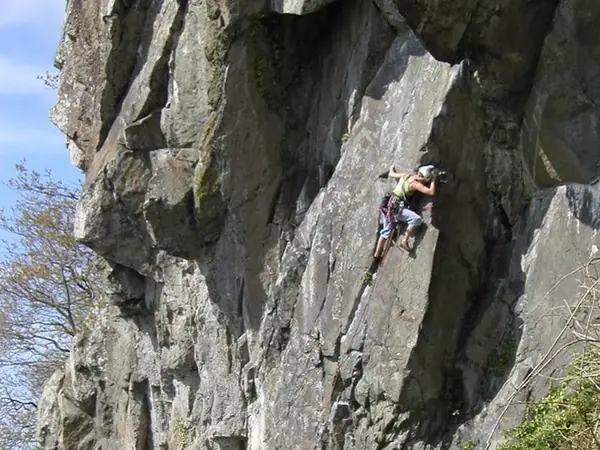 Dolerite trad crag
Craig Bwlch y Moch, Tremadog
BMC-owned multi-pitch crag from V.Diff to E7, and the classic choice when the mountains are wet. Do not cross the top fence or descend behind the crag.
A498 east of Tremadog, Gwynedd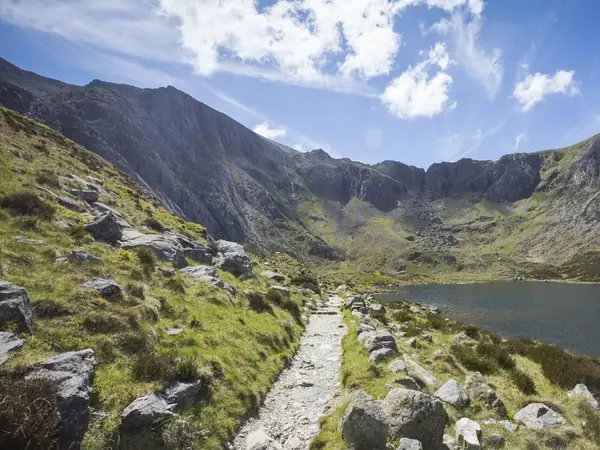 Mountain slab climbing
Idwal Slabs, Cwm Idwal
Long easy classics including Hope (V.Diff) and Tennis Shoe (HS) in a National Nature Reserve. Very busy on fine weekends.
Cwm Idwal, Ogwen Valley, Gwynedd
North Wales sea cliffs, slate and limestone
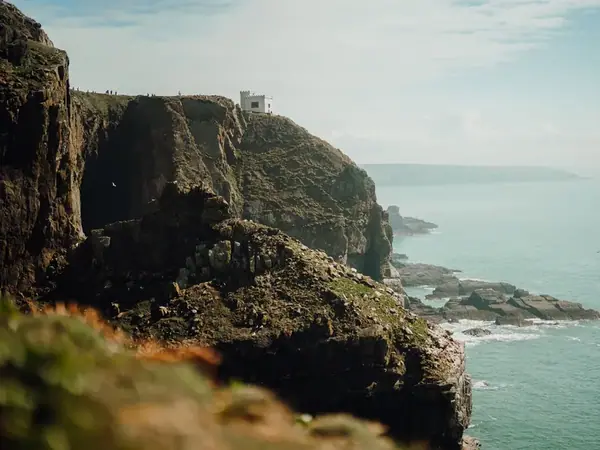 Sea-cliff trad
Gogarth Main Cliff
Serious quartzite sea cliffs for competent leaders, approached from the South Stack car park. Seasonal bird restrictions vary by section, so read each BMC entry.
Holyhead Mountain, Anglesey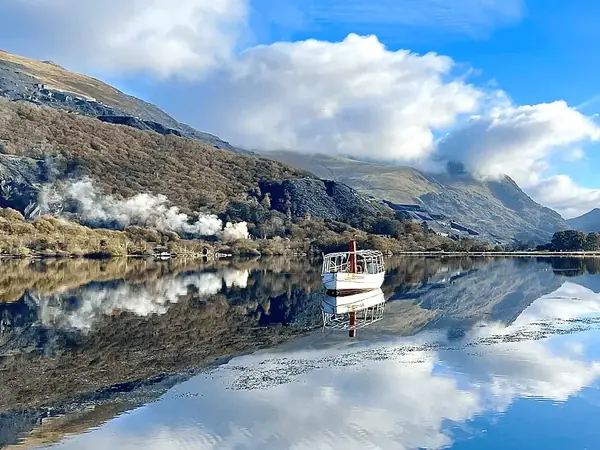 Slate quarry climbing (restricted access)
Dinorwig slate quarries
Mostly First Hydro land, where the owners do not give permission for access away from public paths. Vivian Quarry has no access for any activity; read the BMC entry before considering a visit.
Dinorwig, above Llyn Peris, Gwynedd- Limestone sport crag
Pen Trwyn, Great Orme
Historic hard sport climbing directly above the Marine Drive, with strict seasonal and time-of-day limits. Check the BMC entry for current dates.
Marine Drive, Great Orme, Llandudno
South Wales outdoor climbing
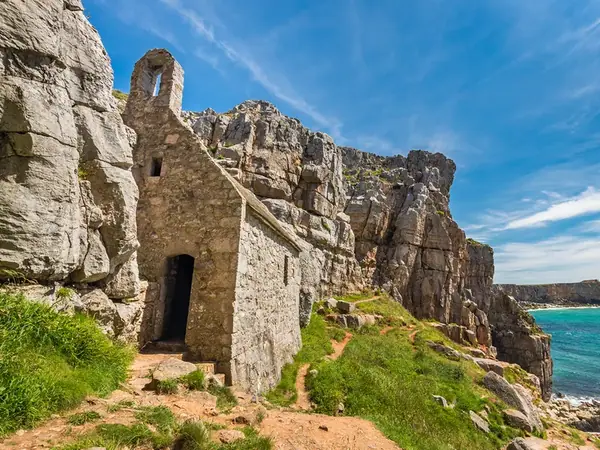 Limestone sea cliffs
St Govan's Head, Range East
Pembroke limestone reached past St Govan's Chapel. Access only outside MoD firing periods, so check the GOV.UK firing notice first; map point is the chapel.
Castlemartin Range East, near Bosherston, Pembrokeshire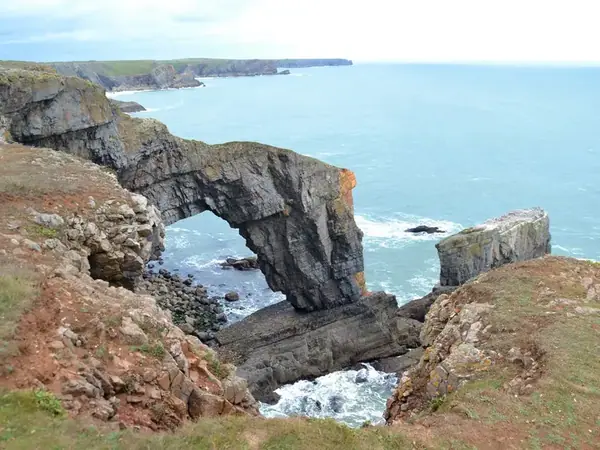 Limestone sea cliffs (briefing required)
Castlemartin Range West
Climbers must attend the annual MoD access briefing before entering; recent BMC notices bar under-18s and pets. Map point is the Green Bridge of Wales on the edge of the range.
Castlemartin Range West, near Stack Rocks, Pembrokeshire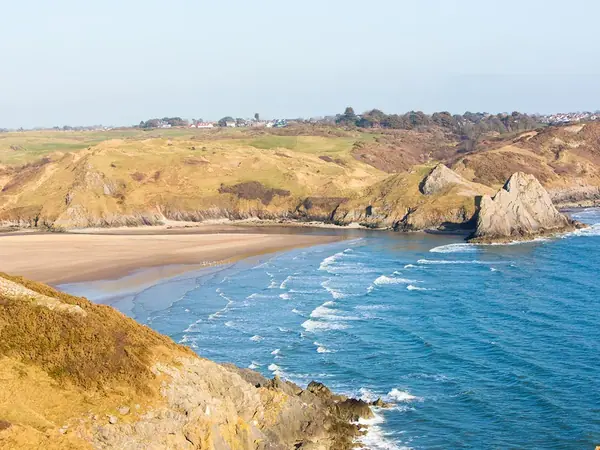 Coastal limestone
Three Cliffs Bay
Short routes above a tidal beach, popular with beginners and clubs. The BMC warns that the sea comes in very fast, so check the tide table and the current entry first.
Three Cliffs Bay, Gower, Swansea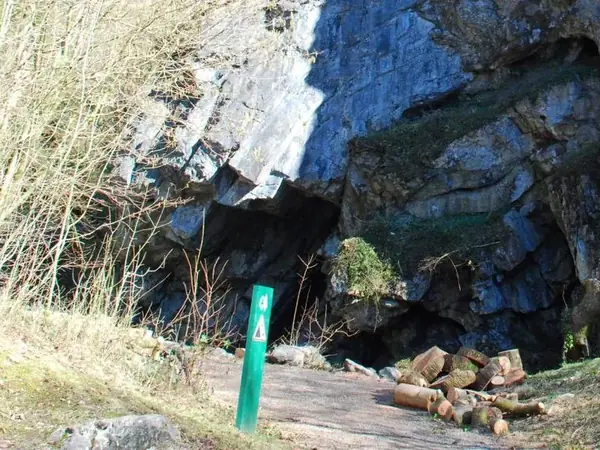 Limestone sport crag
Dinas Rock
A leading high-grade sport venue on a protected site. The south bank is private and its owner has withdrawn permission to climb; groups should contact Natural Resources Wales first.
Craig y Ddinas, Pontneddfechan, Neath Port Talbot- Sandstone sport crag
Trehafod crag
About 21 sunny sandstone routes, often dry in winter and roughly 100 m from Trehafod station. Map point is the village.
Trehafod, Rhondda Cynon Taf
Indoor walls
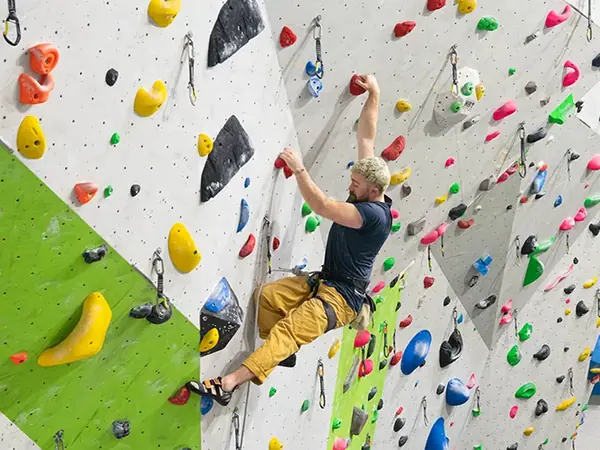 Indoor wall
Beacon Climbing Centre
The largest indoor climbing centre in North Wales, with roped walls, bouldering and a cafe. New climbers need an induction or course.
Adult entry GBP 15.50 (Nov 2026)
Zone 5, Cibyn Estate, Caernarfon, LL55 2BD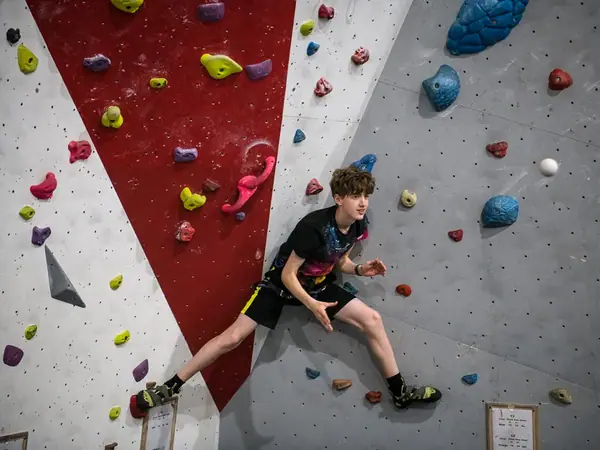 Indoor wall
Indy Climbing Wall
A climbers' wall with more than 30 lead lines and bouldering, handy for Gogarth on a wet day.
Standard entry GBP 13 (Nov 2026)
Plas Llanfair, Llanfairpwllgwyngyll, Anglesey, LL61 6NT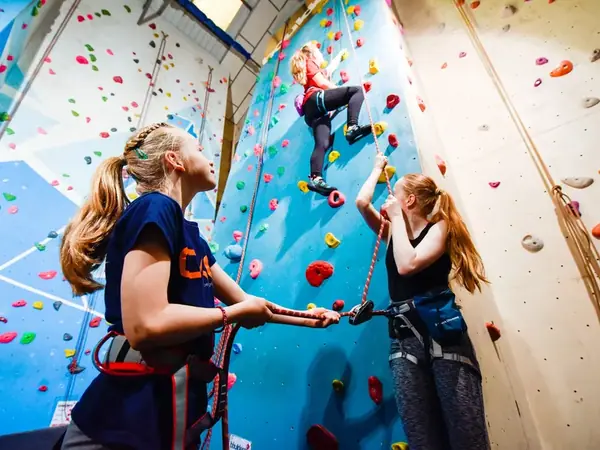 Indoor wall
Boulders Climbing Centre
Roped climbing, lead, bouldering, autobelays and training facilities under one roof, just off Newport Road.
Adult day pass GBP 16.50 (Nov 2026)
St Catherines Park, Pengam Road, Cardiff, CF24 2RZ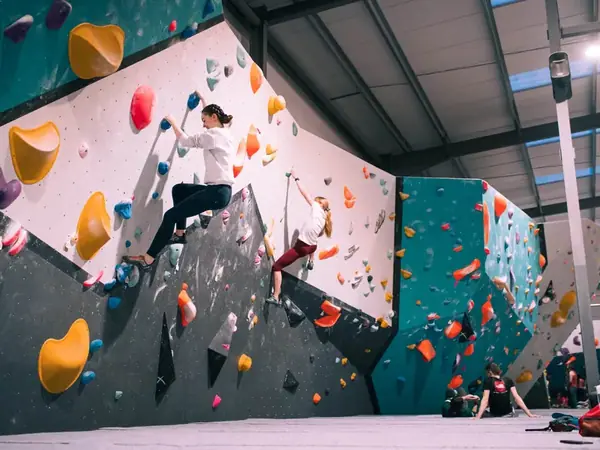 Indoor bouldering centre
Flashpoint Cardiff
A large bouldering centre with training boards and a cafe.
Standard entry GBP 16 (Nov 2026)
Units D and E, Freemans Parc, 236 Penarth Road, Cardiff, CF11 8EQ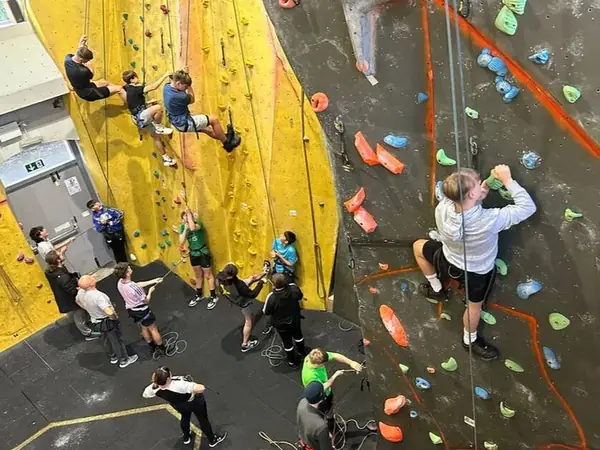 Indoor wall
Dynamic Rock
Swansea's roped indoor centre, with tasters, belay courses, learn-to-lead and outdoor sessions.
Taster GBP 19.50 per person, minimum two (Nov 2026)
16-18 Hebron Road, Clydach, Swansea, SA6 5EJ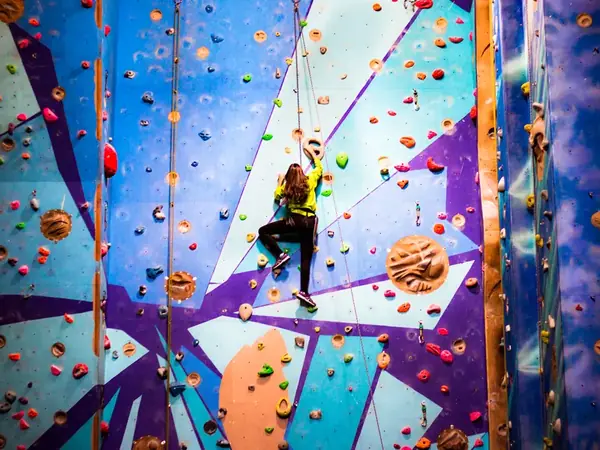 Indoor wall and activity centre
Rock UK Summit Centre
A large indoor climbing centre with bouldering, group accommodation and a man-made caving system, south of Merthyr Tydfil.
The Old Drift Mine, Trelewis, Treharris, CF46 6RD
Instruction and guiding
 National training centre
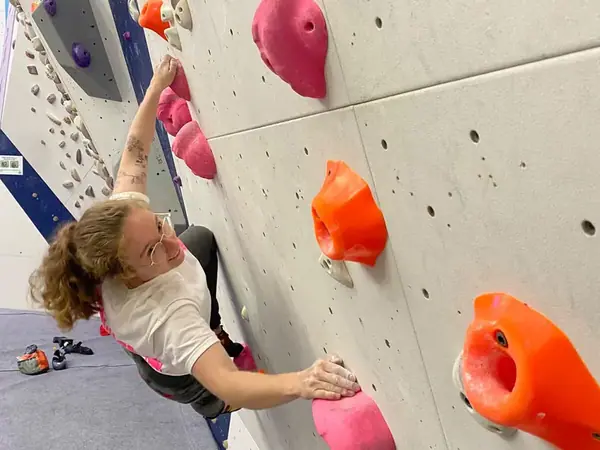
Plas y Brenin National Outdoor Centre
Run by the Mountain Training Trust on behalf of Sport England, with rock, winter and instructor courses and a public climbing wall.
First outdoor climbing course, 2 days, from GBP 180 (2027 programme)
Capel Curig, Conwy, LL24 0ET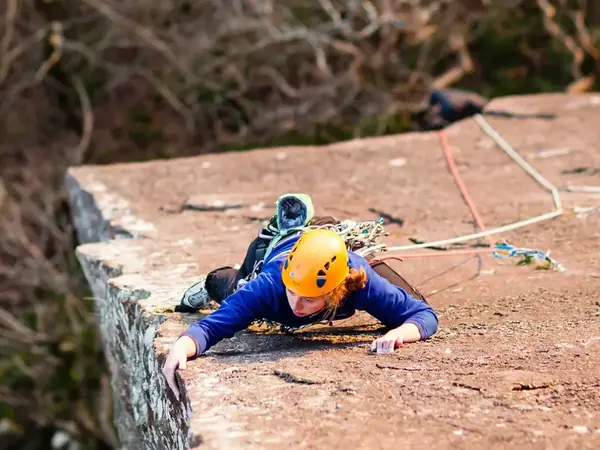 Guiding and courses
RAW Adventures
Bespoke guided climbing and mountaineering plus rock skills courses in Eryri, near Llanberis.
Rock Skills Introduction GBP 95 (Nov 2026)
Yr Hen Ysgol, Brynrefail, Gwynedd, LL55 3NR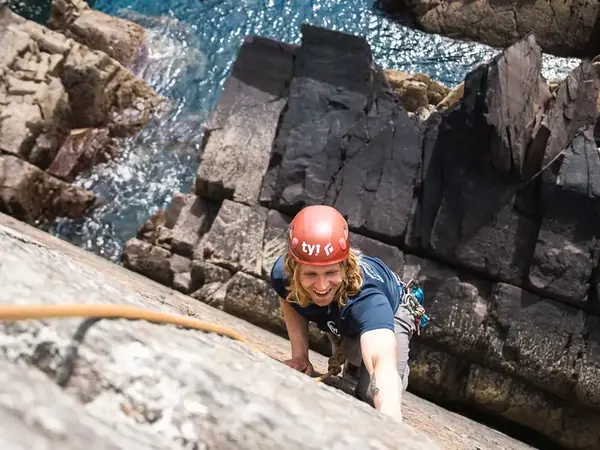 Sea-cliff climbing sessions
TYF Adventure
Guided half-day sea-cliff climbing on the Pembrokeshire coast, with all kit, from age 8.
GBP 65 per person, 3.5 hours (Nov 2026)
20 High Street, St Davids, Pembrokeshire, SA62 6SD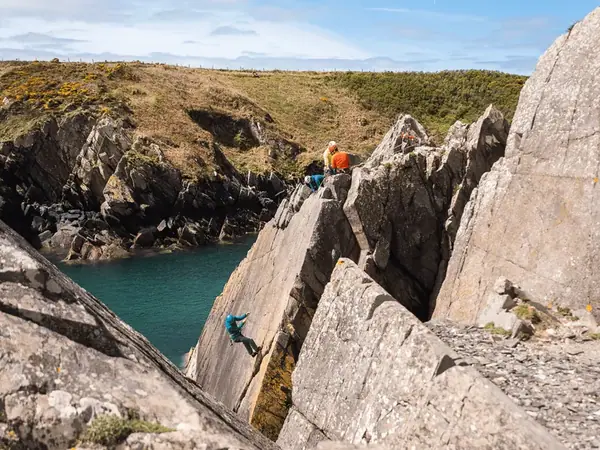 Coastal climbing sessions
Preseli Venture
Half-day coastal climbing for beginners and families, meeting at St Davids, from a base near Mathry.
GBP 65 per person, 3.5 hours (Nov 2026)
Parcynole Fach, Mathry, Haverfordwest, Pembrokeshire, SA62 5HN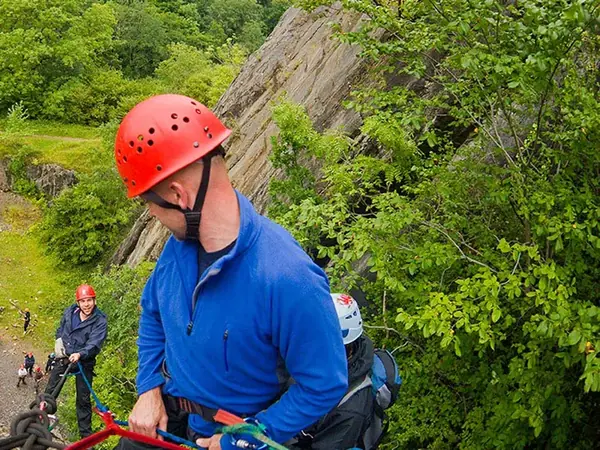 Group activity provider
Adventure Britain
Group rock climbing in the Bannau Brycheiniog and on Gower, often as part of activity weekends. Ask for prices for your group.
Ty Anturiaeth, 83 Church Road, Seven Sisters, Neath, SA10 9DT
Climbing: guided experiences
 4 hoursSouth Wales: Outdoor Rock Climbing Taster Sessionfrom£65
 3 hoursLlanberis: Rock Climbing Experience5.0(1)from£55
 3 hoursLlangollen: Rock Climbing and Abseiling Experience3.4(2)from£65
Prices and availability from GetYourGuide. We may earn a commission if you book.
Climbing in Wales on video
Climbing in Wales: questions people ask
Where is the best rock climbing in Wales for beginners?
Can I climb in the Dinorwig slate quarries?
When are the bird restrictions at Gogarth?
Do I need permission to climb at Castlemartin in Pembroke?
What does a climbing grade like E1 5b mean?
How much does a climbing instructor cost in Wales?
Is there winter climbing in Wales?
What should I do in a climbing emergency in Wales?
More sport in Wales


