
Cardiff Castle: Roman walls, a Norman keep and Burges's gilded rooms
A Roman fort, a Norman keep and some of the most lavish Victorian interiors in Britain, all inside one wall in the middle of the capital. Here is how to see the best of it.
High in the Herbert Tower, the ceiling of the Arab Room hangs over you like a gilded honeycomb, every cell picked out in gold leaf. Below it, carved into the marble fireplace, is the date 1881. That was the year William Burges died, before the room was finished, and his team left the date there as a memorial. It is a small detail in a building full of them, and it tells you most of what you need to know about Cardiff Castle: this is a place where a Victorian aristocrat with one of the largest fortunes in Britain let a brilliant, eccentric architect do more or less whatever he liked.
That is only one of the castles here, though. Walk out of the Victorian apartments and you are standing inside the outline of a Roman fort, looking up at a Norman keep on its grassy mound. Few places in Britain stack so many centuries inside one set of walls, and fewer still sit two minutes from a high street.
Three castles in one wall
It helps to think of the site as three layers. The first is Roman: a series of forts, the earliest probably built around AD 55, and a later stone fort from the mid-3rd century that was meant to deal with raiders coming up the Bristol Channel. The second is medieval: a Norman motte, about 12 m high and the largest in Wales, raised in the late 11th century, with a stone shell keep added on top in the 12th century. The third is the 19th-century Gothic fantasy built by Burges for John Crichton-Stuart, the 3rd Marquess of Bute, whose family had grown rich on the coal docks a mile or so to the south.
Most visitors come for the third layer and are surprised by how much they enjoy the other two. Give yourself time for all of them.
From Roman fort to city property
The Normans chose the site for the same reason the Romans had: a low rise beside the River Taff, close to the sea. William the Conqueror or Robert Fitzhamon (the sources disagree on which) built the first castle around 1081-1091. It soon had a famous prisoner. Robert Curthose, eldest son of the Conqueror and loser in the family power struggle, was held here from 1126 until his death in 1134.
The castle was stormed in 1404 during Owain Glyndŵr's revolt, changed hands during the Civil War and escaped the slighting that wrecked so many Welsh castles. It passed to the Herbert family in 1550 and later, by marriage, to the Butes. The 3rd Marquess inherited it in 1848, as a baby, and from the late 1860s he and Burges turned the western range into the apartments you see today. Building on the Clock Tower began in 1868.
In 1889, while Bute's workmen were digging, they hit the remains of the Roman walls. Rather than bury them again, Bute had the walls rebuilt on their original line, with a band of red stone marking where the genuine Roman masonry stops and the Victorian reconstruction begins. Look for it on the outside of the walls along Castle Street and Kingsway. In 1947 the 5th Marquess gave the castle and the parkland around it to the people of Cardiff, and the city council has run it ever since.

Tours and tickets: Cardiff Castle
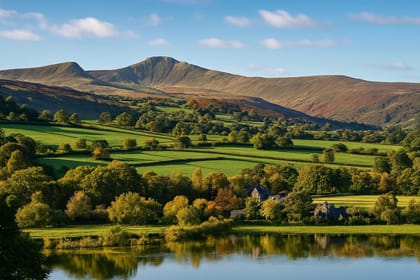 8 hoursCardiff: National Park, Waterfalls & Heritage Day Tour4.9(280)from£83
 8 hoursCardiff: Welsh Castles, Mountains & Steam Railway Day Tour4.7(143)from£119
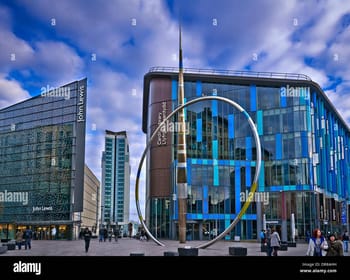 2 hoursCardiff: City Highlights Guided Walking Tour4.8(145)from£18
Prices and availability from GetYourGuide. We may earn a commission if you book.
What to see inside the walls
The Castle Apartments
A standard ticket gets you into a set of the main rooms. The Banqueting Hall, two storeys high, is painted from floor to ceiling with scenes of the castle's medieval lords. The Library downstairs is lined with carved bookcases. The Arab Room's ceiling is the one people photograph. Burges filled the place with private jokes, animals, saints and allegories, and it rewards slow looking more than quick walking.
The best rooms, however, are only shown on the guided House Tour: the Winter Smoking Room, the Nursery, decorated with fairy-tale scenes, Lord Bute's Bedroom and the Roof Garden. The tour lasts about 50 minutes and runs daily on the hour from 11:00 to 15:00. It cannot be booked in advance, so buy the upgrade at the ticket office as soon as you arrive, especially on a weekend or in school holidays.
The Clock Tower
The 40 m Clock Tower, with its painted heraldry and statues, is the castle's landmark from the street. Inside, up a spiral staircase, are the Winter Smoking Room, the Bachelor Bedroom and the Summer Smoking Room, perhaps Burges's most extravagant interior. These rooms are shown on a separate 35-minute tour that runs on weekends and bank holidays from April to September only, at 11:30, 12:30, 13:30 and 14:30.
The Norman keep
Climb the motte for the best view in central Cardiff: the Principality Stadium, the Clock Tower and the green sweep of Bute Park towards the hills. The path up and the steps into the keep make around 50 stone steps with a handrail, and a short spiral stair leads to the gate-tower viewing platform. They are slippery in rain.
The wartime shelters
During the Second World War, the tunnels inside the thick castle walls were turned into air-raid shelters with room for up to 1,800 people. Walking through them, with recordings and posters from the period, is a sobering change of tone after the gilded apartments, and children often remember it best.
Firing Line
The regimental museum of 1st The Queen's Dragoon Guards and The Royal Welsh sits in the interpretation centre by the South Gate. Entry is included in the castle ticket. It covers more than 300 years of soldiering, including Waterloo and Rorke's Drift, and is worth half an hour even if military museums are not usually your thing.
The Animal Wall
Outside, free to see, a line of stone animals climbs the wall along Castle Street towards Bute Park: lions, a hyena, an anteater, a pelican and more. They were designed in the Burges era and moved to their present spot in the 1920s. Look out for the ones that appear to be scrambling over the parapet.

Tickets and tours
A Castle Ticket is valid all day, so you can leave for lunch and come back.
| Ticket | Castle entry | Guided tour upgrade |
|---|---|---|
| Adult | £16.50 | £5.00 |
| Child (5-16, with an adult) | £11 | £4.00 |
| Senior, student or disabled | £13 | £4.50 |
| Family (2 adults, 2 children) | £44 | £15.00 |
| Under 5 | Free | Free |
A carer goes free with each disabled ticket. You can buy online in advance or at the ticket office, and an Annual Pass upgrade (adults add £8) gives twelve months' free entry from the date of issue. People who live or work in Cardiff can get a Castle Key, which gives free admission for at least three years. An audio guide is available in ten languages, and there is a free British Sign Language tour through the castle's BSL app.
Opening hours and when to go
The castle is open every day except 25 and 26 December and 1 January. Summer hours (March to October) run to 18:00, and winter hours (November to February) to 17:00. On weekdays the gates open at 10:00. At weekends, and on bank holidays and school holidays, they open at 09:00. Last entry is one hour before closing in both seasons.
Allow two and a half to three hours for the apartments, a tour, the keep and the shelters. Arrive at opening on a Saturday and you will have the keep to yourself for a while. Weekday mornings in term time are quietest of all. Cardiff is mild but wet in winter: November and December average around 130-140 mm of rain (Met Office, Bute Park, 1991-2020), and the Cardiff weather and climate guide has the month-by-month figures. Most of the visit is indoors or under cover, which makes this a good rainy-day choice, though the keep climb is not.
Getting there
The castle is at the top of St Mary Street, at the junction of Castle Street and Duke Street, right in the city centre. From Cardiff Central station it is a flat 10-15 minute walk north, and from Queen Street station about the same. Trains from London Paddington take about two hours, and the guide to getting to Wales by train, coach and air covers routes from England and the airports.
Almost every city bus route stops within a few minutes' walk. Driving is not worth it: there is no visitor car park at the castle, and the city-centre car parks fill on match and concert days, when roads around the stadium are closed for hours.
Inside the walls, the apartments and the keep are not accessible by wheelchair or pushchair. The interpretation centre has a lift to the roof terrace, from where there is level access along the battlement walk and a ramp down to the castle green.

Eating and staying nearby
The Castle Café, on the terrace with covered seating facing the Norman keep, does sandwiches, cakes and hot drinks, with a licensed bar for beer and cider. It is open during visiting hours and sits in the free Public Square, so you do not need a ticket to stop for a coffee. The castle also runs a Keep Terrace kitchen and bar; ask at the ticket office which outlets are open on the day. For a proper lunch, walk out of the South Gate: the Victorian arcades off St Mary Street and Queen Street, and Cardiff Market a few minutes away, are full of independent cafés.
Staying in the centre means you can walk to the castle, the stadium and the Bay bus stops. Browse hotels in Cardiff city centre for live prices. Note that Cardiff introduces a visitor levy on overnight stays from 1 April 2027: £1.30 per person per night in most hotels and guesthouses, and 75p for shared hostel dorm beds and tent pitches. It applies to bookings for stays from that date, so it may already appear on reservations you make now for spring 2027.
Combine it with
Burges and Bute did not stop at Cardiff. About five miles north, above Tongwynlais, they rebuilt a ruined medieval fortress as a summer retreat, and Castell Coch is the natural second half of a day in their company: smaller, stranger and set in beech woods. Water buses run from the edge of Bute Park, behind the castle, down the Taff to Cardiff Bay, (sailings depend on the season and river conditions, so check times on the day), where the docks that paid for all this gilding have become the home of the Senedd and the Wales Millennium Centre. For the everyday lives of the people who never saw the inside of a marquess's smoking room, spend a morning at St Fagans National Museum of History on the western edge of the city.
The guide to Cardiff and the Vale of Glamorgan has more ideas for a longer stay, and there are walking tours and day trips bookable through our page on tours and things to do in Cardiff.
Cardiff Castle on video
Cardiff Castle: questions people ask
How much does Cardiff Castle cost to visit?
Do I need to book Cardiff Castle tickets in advance?
Is the Cardiff Castle house tour worth it?
Can you climb the Clock Tower?
How long do you need at Cardiff Castle?
Is Cardiff Castle accessible for wheelchair users?
Cardiff Castle on the map
Nearby attractions

Cardiff Bay
Coal built it, a barrage reinvented it. The best way to see the old Tiger Bay docks is on foot, from the Millennium Centre out across the barrage to Penarth.

St Fagans National Museum of History
More than forty buildings from all over Wales, taken down and rebuilt in the grounds of an Elizabethan manor. Free, vast and the best place to meet the Welsh past.

Castell Coch
A Victorian fantasy on medieval foundations, rising out of beech woods five miles from Cardiff. The scaffolding is finally down, and the original red is back.

Caerphilly Castle
Thirty acres of walls, dams and lakes in a Valleys town, with a tower that out-leans Pisa. Closed this winter for a new bridge; Cadw plans to reopen by Easter 2027.

Big Pit National Coal Museum
Free to enter, with a guided descent 90 m into a real colliery. What the underground tour involves, what it now costs, and how to fit Blaenavon's World Heritage landscape around it.

Chepstow Castle
Begun within a year of the Norman Conquest and added to for six centuries, Chepstow Castle strings the whole history of castle building along one limestone cliff above the River Wye.
If you like Cardiff Castle
Castell Coch
A Victorian fantasy on medieval foundations, rising out of beech woods five miles from Cardiff. The scaffolding is finally down, and the original red is back.
Cardiff Bay
Coal built it, a barrage reinvented it. The best way to see the old Tiger Bay docks is on foot, from the Millennium Centre out across the barrage to Penarth.
St Fagans National Museum of History
More than forty buildings from all over Wales, taken down and rebuilt in the grounds of an Elizabethan manor. Free, vast and the best place to meet the Welsh past.