
The South Wales Valleys: coal, iron, castles and hillside rides
The old coalfield north of Cardiff made modern Wales. Today its valleys are greener than they have been for two centuries, and an electric railway runs up most of them.
Ninety metres down
Before the cage at Big Pit drops 90 m into the old workings, a former miner collects everything with a battery in it: phones, watches, car key fobs. Sparks and methane do not mix, and the rule has outlived the coal. Down below, with only your helmet lamp on the roadway and a guide who once worked shifts like these, you begin to understand what the place meant. It is the best introduction to the Valleys there is, and it costs £5.
The Valleys are the narrow, parallel river valleys that run north from Cardiff and Newport into the uplands: the Rhondda Fawr and Rhondda Fach, the Cynon, the Taff, the Rhymney, the Sirhowy, the Ebbw and others. In the 19th century iron and then coal pulled hundreds of thousands of people into them, and Merthyr Tydfil grew into the largest town in Wales. The pits have all gone, the tips have been landscaped or have greened over, and what is left is terraced streets stacked along hillsides, chapels and workmen's halls, and a landscape that is wilder than most visitors expect.
Top things to see
Blaenavon World Heritage Site
UNESCO inscribed the Blaenavon Industrial Landscape in 2000. Its two anchors sit a short walk apart. Big Pit National Coal Museum, worked from about 1860 to 1980, is free to enter, open daily from 9.30am to 4pm; the underground tour costs £5 on the day or £8 for a guaranteed timed slot booked in advance, and in December, January and early February it is worth phoning ahead to check tours are running. Blaenavon Ironworks, cared for by Cadw, keeps its blast furnaces, cast houses and a water-balance tower that once lifted wagons up the hill.

Caerphilly Castle
Caerphilly Castle is the largest castle in Wales, a 13th-century fortress wrapped in artificial lakes, with a south-east tower that leans further than Pisa's. Its Great Hall reopened in July 2025 after an £8 million first phase of work. The castle is closed from 30 November 2026 while Cadw installs a new bridge, and plans to reopen by the 2027 Easter weekend.
Merthyr and the heads of the valleys
Cyfarthfa Castle, the ironmaster Crawshay family's mansion above Merthyr, is now a museum and art gallery in a large park. The narrow-gauge Brecon Mountain Railway steams north from Pant, near Merthyr, into the national park. For adrenaline, BikePark Wales on the hills above Merthyr is one of Britain's biggest mountain-bike centres, and Zip World Tower at Rhigos runs its zip lines on the site of the old Tower Colliery.
Pontypridd and the Rhondda
Pontypridd's old bridge over the Taff, built by William Edwards in 1756, was once claimed as the longest single-span stone bridge in Europe, and the restored lido in Ynysangharad Park opens in the warmer months. Up the Rhondda, Treorchy's high street is the place to see a valley town at work, and the Bwlch mountain road above Treorchy and Cwmparc gives the classic view down the valley.
Towns worth stopping in
Blaenavon is small, high and windswept, with a heritage centre and a few cafés. Caerphilly is really a commuter town with a giant castle in the middle, and the town that gave its name to a crumbly white cheese. Merthyr Tydfil has the shops, the railway terminus and access to the Beacons. Pontypridd is the liveliest of the mid-valley towns. Aberdare has Dare Valley Country Park on its doorstep.
Tours in The South Wales Valleys
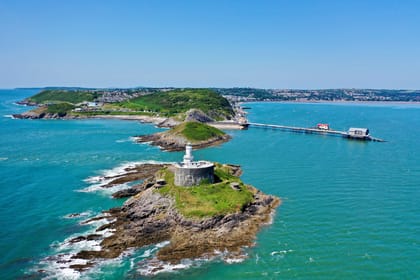 8 hoursCardiff/Swansea: Gower Peninsula's Cliffs & Mumbles Day Tour4.9(284)from£83
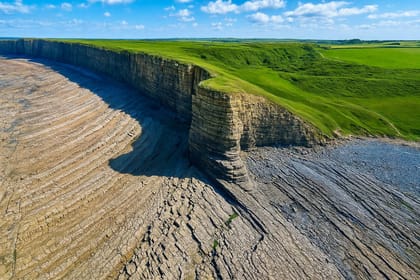 8 hoursCardiff: South Wales Cliffs, Beaches & Castles Day Tour4.9(284)from£62.25
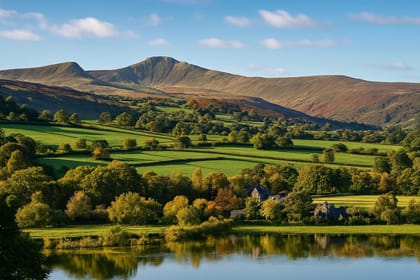 8 hoursCardiff: National Park, Waterfalls & Heritage Day Tour4.9(280)from£83
Prices and availability from GetYourGuide. We may earn a commission if you book.
Getting around without a car
This is the part of Wales built around railways, and it still is. The Cardiff Valley Lines run from Cardiff Central and Queen Street to Merthyr Tydfil, Aberdare, Treherbert at the head of the Rhondda, Rhymney (via Caerphilly) and Coryton, and the whole core network is now electrified as part of the South Wales Metro. The new Class 398 tram-trains were taken out of service in September 2026 for software updates, with no return date announced by November 2026, so check Transport for Wales on the day. Merthyr and Treherbert are each about an hour from Cardiff; Caerphilly is about twenty minutes. A separate line runs from Cardiff to Ebbw Vale. For Blaenavon and Big Pit, take a train to Newport and the Stagecoach X24, which stops at Big Pit. From Merthyr station, the TrawsCymru T4 carries on north to the Storey Arms and Brecon. See our guide to trains in Wales and tickets and passes, including day rovers.
Where to stay
There are guesthouses and a few hotels in the valleys themselves, but most visitors base themselves in the capital and ride up for the day: browse hotels in Cardiff, which puts every Valley Line within an hour. If you are combining the heads of the valleys with Pen y Fan or the Brecon Mountain Railway, hotels in Brecon are under an hour north of Merthyr on the T4.
Local tip

For guided tours from Cardiff that include the Valleys and the Beacons, see things to do in Cardiff.
The South Wales Valleys: practical questions
Is Big Pit free?
Is Caerphilly Castle open this winter?
Can you visit the Valleys without a car?
Top attractions in The South Wales Valleys
See all →
Caerphilly Castle
Thirty acres of walls, dams and lakes in a Valleys town, with a tower that out-leans Pisa. Closed this winter for a new bridge; Cadw plans to reopen by Easter 2027.

Big Pit National Coal Museum
Free to enter, with a guided descent 90 m into a real colliery. What the underground tour involves, what it now costs, and how to fit Blaenavon's World Heritage landscape around it.