
Wye Valley and Monmouthshire: abbeys, border castles and Wales's food town
The first stretch of Wales most travellers see from the Severn crossing, and the one they rush through. Slow down: three great ruins sit within a half-hour drive of each other.
A border written in stone
In July 1798 William Wordsworth sat on the banks of the Wye a few miles above Tintern and wrote the poem that, more or less, invented the idea of the Wye Valley as a place to look at. Tourists had been floating down the river to admire its ruins for decades before him. They still come, and the river still does what it did then: it loops through a deep, wooded gorge between Monmouth and Chepstow, with England on one bank and Wales on the other, and a medieval ruin at almost every bend.
Monmouthshire is the rest of the county around it: rolling farmland, small market towns, the Usk valley, and in the north-west the first hills of the Black Mountains above Abergavenny. It is the softest, most English-looking corner of Wales, and also one of its richest in castles, because for three centuries this was the frontier the Normans had to hold.
Along the river
Chepstow
Chepstow Castle was begun in 1067 or soon after by William FitzOsbern, and is the oldest surviving post-Roman stone fortification in Britain. It runs along a narrow cliff above the Wye, a long chain of courtyards that grew for two centuries. Its great gatehouse doors have been tree-ring dated to 1159-89, making them among the oldest castle doors in Europe. The Offa's Dyke Path starts at Sedbury Cliffs, just across the river.
Tintern
Tintern Abbey, founded for Cistercian monks in 1131, is the most complete ruined abbey in Wales: the church walls stand almost to full height, with the window tracery open to the sky. Winter hours run from 1 November to 28 February, 10am-4pm. Come early or late in the day to see it without tour coaches.

Monmouth
The birthplace of Henry V has a handsome main square and the Monnow Bridge, the only remaining fortified river bridge in Great Britain with its gate tower still standing on the bridge. Above the town, the Kymin, a National Trust hilltop with a little round house and a Naval Temple, gives views over the Wye and into England.
Away from the river
Raglan Castle is a different kind of ruin: a 15th-century fortress-palace built for show as much as defence, with a moated Great Tower and grand state rooms, slighted after a Civil War siege. North of it, the Three Castles (Skenfrith, Grosmont and White Castle) make a quiet half-day loop by car. Usk is a small, flower-filled town on its own river. Abergavenny sits between the Skirrid, the Sugar Loaf and the Blorenge, with a covered market and a ruined castle, and is the base for walks into the Black Mountains and the ruined Llanthony Priory in the Vale of Ewyas.
Tours in Wye Valley and Monmouthshire
 Bestseller3 h 30 minFrom Barry Island: Gavin and Stacey Tour4.9(520)from£45
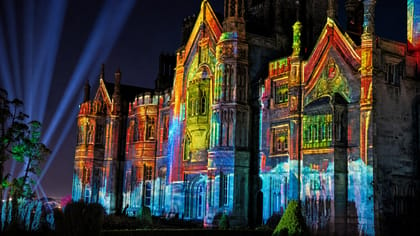 1 h 30 minMargam: Christmas Light Trail at Gothic Castle Entry Ticketfrom£26.75
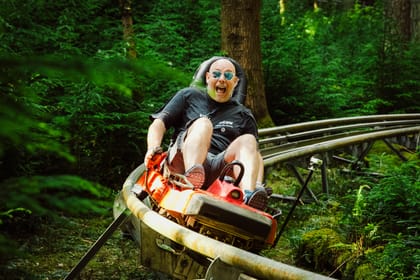 1 hourBetws-y-Coed: UK's longest alpine coaster (Fforest Coaster)4.5(50)from£31
Prices and availability from GetYourGuide. We may earn a commission if you book.
Food
Abergavenny calls itself the food capital of Wales, and on the third weekend of September its food festival (19-20 September in 2026) fills the town and the castle grounds. The rest of the year, the market hall, the farm shops along the valleys and a cluster of serious country restaurants and pubs between Abergavenny and Monmouth keep the reputation going. The Wye and Usk valleys also have a growing number of vineyards.
Getting around without a car
Chepstow station is on the line from Cardiff and Newport to Gloucester, and Abergavenny is on the Cardiff-Manchester line, with TfW trains roughly hourly. The key bus for the valley is the 69, run by Newport Bus for the county council, which links Chepstow bus station with St Arvans, Tintern, Redbrook and Monmouth; it does not run late, so check the last return. Buses also link Monmouth, Raglan and Abergavenny, but services are infrequent, and the Three Castles are really car or bike territory. Plan on Traveline Cymru and see our guide to buses in Wales.
Where to stay
Monmouthshire is a county of coaching inns, farm B&Bs and restaurants with rooms. Monmouth and Abergavenny have the most choice; Tintern has a handful of riverside inns. For bigger hotels, hotels in Cardiff are about forty minutes by train from Chepstow and Abergavenny. If you are pairing Abergavenny with the Beacons, look at places to stay in Brecon, and for characterful inns try our boutique hotels in Wales.
Local tip

For Wye canoe trips and castle tours, see tours and activities in Wales.
Wye Valley and Monmouthshire: practical questions
Can you visit Tintern Abbey by bus?
Which castle is best: Chepstow, Raglan or Tintern?
When is the Abergavenny Food Festival?
Top attractions in Wye Valley and Monmouthshire
See all →
Tintern Abbey (Abaty Tyndyrn)
Wales's first Cistercian abbey stands roofless on a bend of the Wye. Here is what to see, what the current repairs mean for your visit, and how to get there by bus.

Chepstow Castle
Begun within a year of the Norman Conquest and added to for six centuries, Chepstow Castle strings the whole history of castle building along one limestone cliff above the River Wye.

Raglan Castle (Castell Rhaglan)
Built by ambitious Welsh lords in the fifteenth century and wrecked after one of the last sieges of the Civil War, Raglan is a palace in fortress clothing, and a ruin with real presence.